Choosing the Right Drawer Size: What to Know Before Buying a Herbal Medicine Cabinet
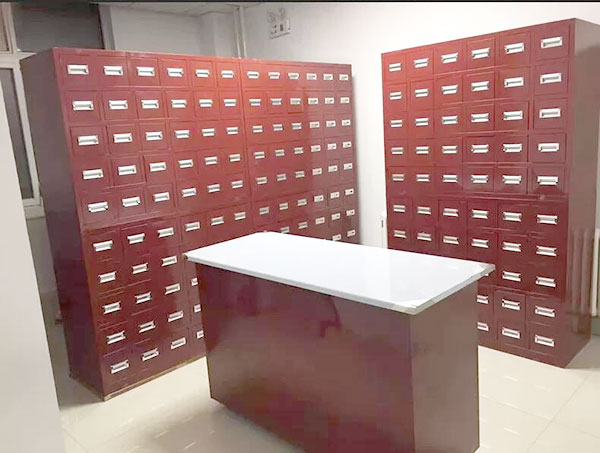
In the world of Traditional Chinese Medicine (TCM), the herbal medicine cabinet (often called the “Hundred-Eye Cabinet”) is more than just a piece of furniture—it is the functional heart of the pharmacy. Whether you are running a busy hospital department, a private clinic, or a wellness center, the organization of your herbs directly impacts the quality of care you provide.
Among all the specifications to consider, drawer size is arguably the most critical. It dictates how many varieties of herbs you can store, how fresh they remain, and how quickly a practitioner can fulfill a prescription. In this guide, we will dive deep into the science of drawer dimensions to help you make an informed investment.
I. Why Does Drawer Size Matter in a Herbal Cabinet?
Choosing the wrong size isn’t just a minor inconvenience; it can lead to operational bottlenecks and even degradation of expensive medicinal materials. Here is why precision in dimensions is essential:
1. Optimized Herb Preservation
Chinese herbs come in all shapes and sizes—from delicate dried flowers and leaves to heavy minerals and dense roots. If a drawer is too small, bulky herbs like Astragalus (Huang Qi) get crushed, losing their physical integrity. Conversely, if a drawer is too large for a low-volume herb, the excess air trapped inside can accelerate oxidation or moisture absorption.
2. Efficiency and Dispensing Accuracy
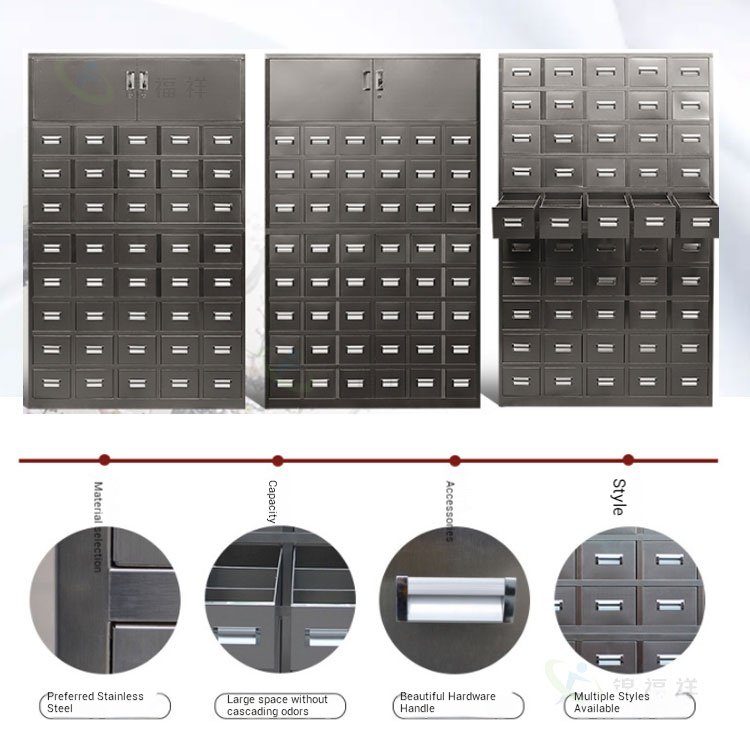
In a high-traffic clinic, speed is vital. A well-sized drawer allows for the use of internal dividers (often 2-3 compartments per drawer). This creates a logical “grid” that the pharmacist can navigate by touch and memory. Standardized sizes reduce the time spent searching and lower the risk of dispensing the wrong herb.
3. Ergonomics and Space Utilization
Clinic floor space is often expensive. By selecting the right drawer configuration, you can maximize your “storage density.” This means fitting more herb varieties into a smaller footprint without making the cabinet so tall that it becomes a safety hazard.
II. Analyzing Common Drawer Sizes and Their Applications
Based on industry standards and manufacturing data, herbal drawers generally fall into three categories. Understanding these will help you mix and match to create the perfect cabinet.
1. Small Drawers (Width: 150mm – 210mm)
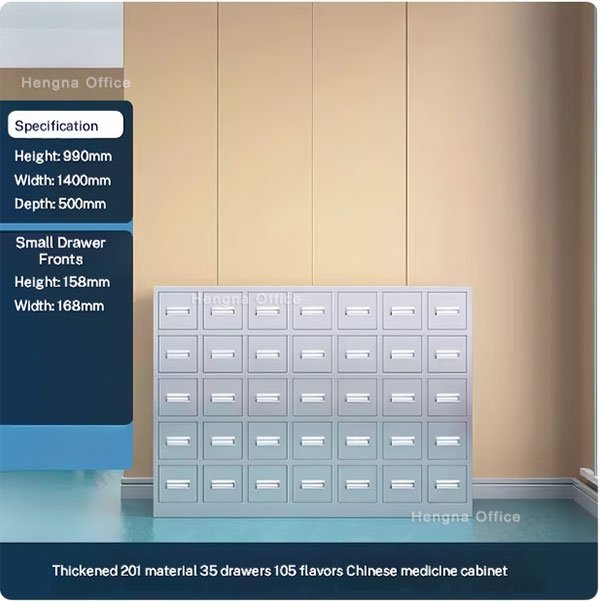
These are the most common drawers found in high-capacity cabinets (such as the “30-drawer, 90-herb” models).
- Best for: Rare, expensive, or highly potent herbs used in small quantities (e.g., Ginseng, Saffron, or specialized resins).
- Capacity: Usually designed to hold two or three small herb compartments.
- Advantage: Allows for maximum variety. You can store 100+ types of herbs in a single compact unit, making it ideal for clinics with a wide-ranging pharmacopeia but limited daily volume per herb.
2. Medium Drawers (Width: 210mm – 300mm)
Commonly found in “48-herb” dispensing counters or specialized modular units.
- Best for: Standard “workhorse” herbs—roots, rhizomes, and minerals that are included in the majority of formulas (e.g., Licorice root, Angelica Sinensis).
- Capacity: Provides enough depth for larger scoops and easy hand-access.
- Advantage: A perfect balance between variety and volume. These drawers are less prone to “overflow” during peak seasons.
3. Large/Jumbo Drawers (Width: 300mm+)
Often located at the bottom of the cabinet or sold as specialized “bulk” units.
- Best for: High-volume “filler” herbs or very light, bulky materials like dried lotus leaves, flowers, or vine-based medicines.
- Capacity: Designed for bulk storage or frequently used base herbs.
- Advantage: Reduces the frequency of restocking. In a busy pharmacy, these drawers save staff hours by holding a week’s worth of supply rather than a day’s.
III. Key Specifications to Look For
When browsing a catalog, you will see various dimensions. Here is how to interpret them:
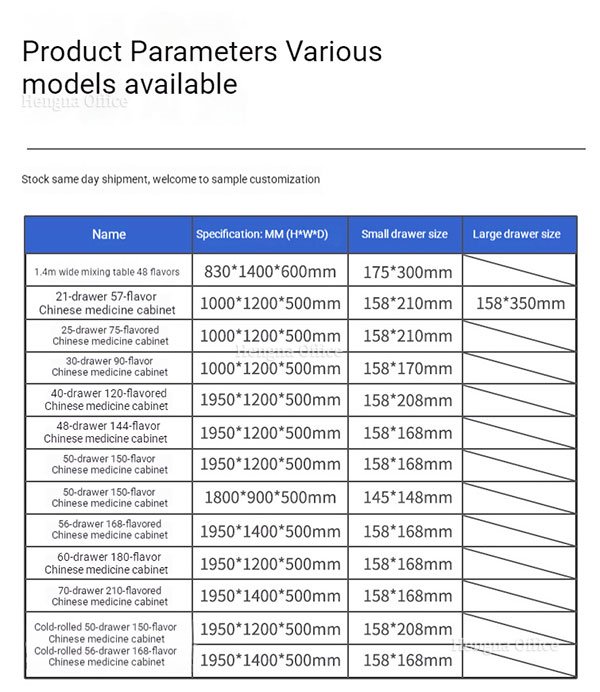
| Model Type | Drawer Count | Width (mm) | Depth (mm) | Height (mm) | Material Recommendation |
| Standard High-Capacity | 30 Drawers / 90 Herbs | 158mm | 500mm | 160mm | 201/304 Stainless Steel |
| Dispensing Counter | 48 Herbs | 215mm | 500mm | 158mm | Cold Rolled Steel / Wood |
| Bulk Storage Unit | 20 Drawers | 350mm | 600mm | 200mm | Thickened Stainless Steel |
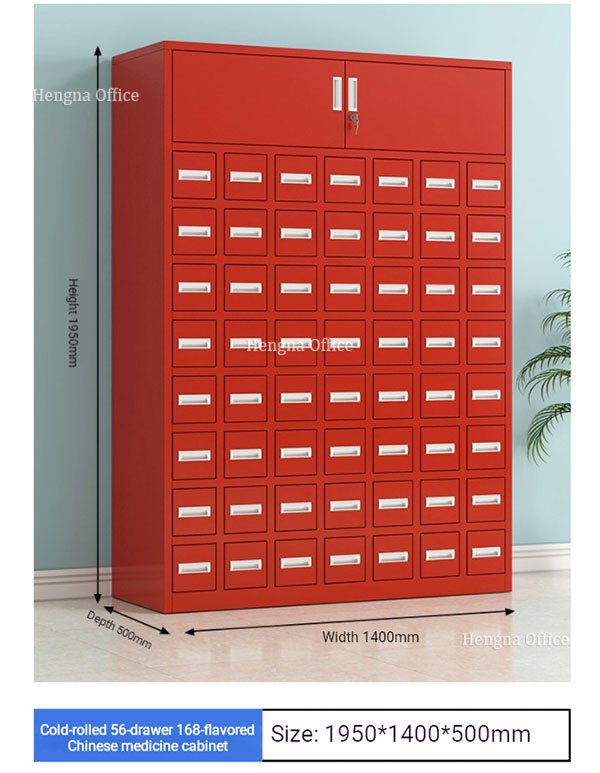
Pro Tip: Always check the depth. A standard cabinet depth is $500mm$. Ensure your pharmacy layout allows for the drawers to be fully extended without blocking walkways.
IV. A Step-by-Step Guide to Choosing Your Cabinet
Step 1: Audit Your Inventory
List the herbs you prescribe most frequently. Categorize them by volume:
- High Volume: 10-15 herbs (Need Large Drawers)
- Standard Volume: 40-60 herbs (Need Medium Drawers)
- Low Volume/Precious: 30+ herbs (Need Small Drawers)
Step 2: Measure Your Clinic Space
Remember the “Golden Triangle” of pharmacy workflow: the distance between the herb cabinet, the weighing scale, and the packaging station. If space is tight, look for a “High-Rise” cabinet (up to $1950mm$ tall) with small drawers to maximize vertical space.
Step 3: Material and Build Quality
The drawer size is only as good as the mechanism moving it.
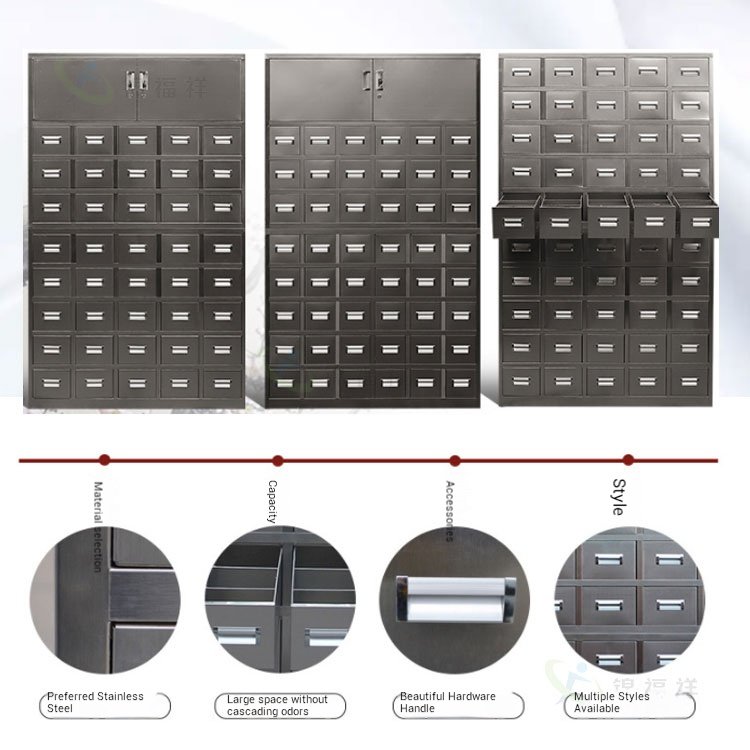
- Stainless Steel (201/304): Ideal for humid environments or modern clinics. It is easy to sanitize and fireproof.
- Sliding Tracks: Ensure the drawers use high-quality rollers. A drawer filled with $5kg$ of mineral herbs needs to glide open with minimal effort to prevent repetitive strain injuries for the staff.
Step 4: Future-Proofing
Your clinic will grow. If you currently stock 100 herbs, buy a cabinet with capacity for 120. Choosing a modular system where you can add units with different drawer sizes later is a smart long-term strategy.
V. Frequently Asked Questions (FAQ)
Q: Can I have different drawer sizes in one cabinet?
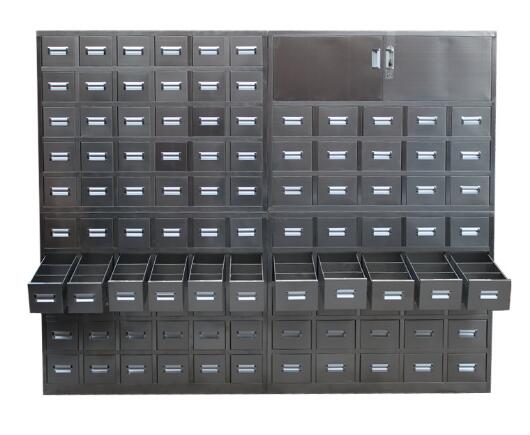
A: Yes! Many manufacturers offer “Hybrid” cabinets. Typically, these have small drawers at eye level for precision and large drawers at the bottom for bulk storage. This is the most ergonomic setup.
Q: How many herbs can one drawer typically hold?
A: Standard Chinese medicine drawers are divided into 2, 3, or sometimes 4 compartments (known as “Dou”). A 30-drawer cabinet usually stores 90 herbs.
Q: Is stainless steel better than wood for drawer longevity?
A: While wood is traditional, stainless steel is increasingly popular due to its resistance to pests, mold, and odors. It also ensures that the drawer dimensions remain stable and do not warp over time.
Choosing the right drawer size for your herbal medicine cabinet is an investment in your clinic’s operational health. By matching your drawer dimensions to the specific needs of your herbs, you ensure better preservation, faster dispensing, and a more professional environment.
Don’t settle for a one-size-fits-all solution. Evaluate your inventory, measure your space, and select a configuration that brings order to the complex beauty of Traditional Chinese Medicine.