Stainless Steel vs. Wooden Apothecary Chests: Why Metal is the Superior Choice for Dried Herb Storage
In Traditional Chinese Medicine (TCM) and botanical wellness, potency defines quality. Even the finest ginseng and the most carefully selected dried herbs can rapidly lose their therapeutic value without proper storage—turning premium ingredients into costly losses.
For centuries, the wooden “Hundred-Drawer Cabinet” (Baizigui) has been the iconic symbol of the apothecary. However, as our understanding of material science and food safety evolves, a new standard has emerged. While wood carries a certain vintage charm, stainless steel has become the superior choice for serious practitioners and collectors.
In this comprehensive guide, we explore why upgrading to a stainless steel apothecary chest is the smartest move for preserving the integrity of your dried herbs.
I. The Material Showdown: Tradition vs. Performance
The Limitations of the Traditional Wooden Cabinet
Wooden cabinets are often romanticized for their “natural” feel. However, wood is a biological, porous material. This leads to several critical flaws in an apothecary setting:
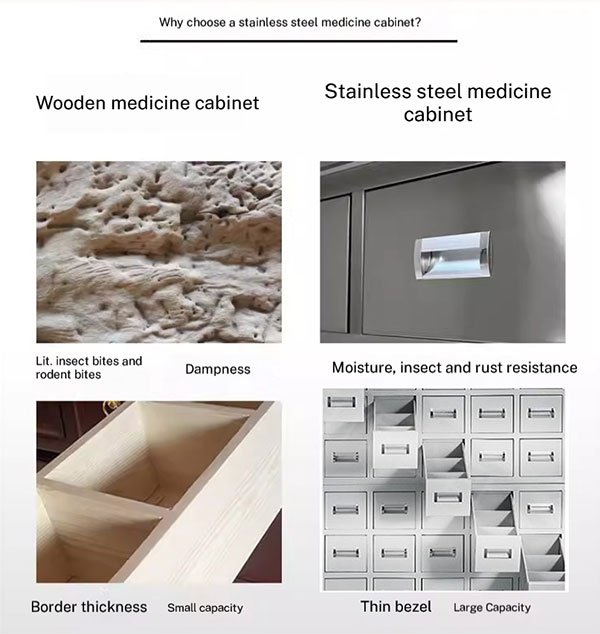
- Hygroscopic Nature: Wood breathes. It absorbs moisture from the air and releases it. In humid climates or during rainy seasons, wooden drawers can become “moisture traps,” leading to clumped powders and moldy roots.
- The “Scent Memory” Problem: Wood absorbs the essential oils and volatile compounds of the herbs stored within it. Over years of use, a wooden drawer “remembers” the smell of every herb it has ever held, leading to unavoidable cross-contamination of aromas.
- Pest Vulnerability: For beetles, moths, and rodents, a wooden cabinet is both a meal and a home. Many traditional herbs are high in starch and sugar, attracting pests that can easily chew through or nest within wooden joints.
The Stainless Steel Advantage
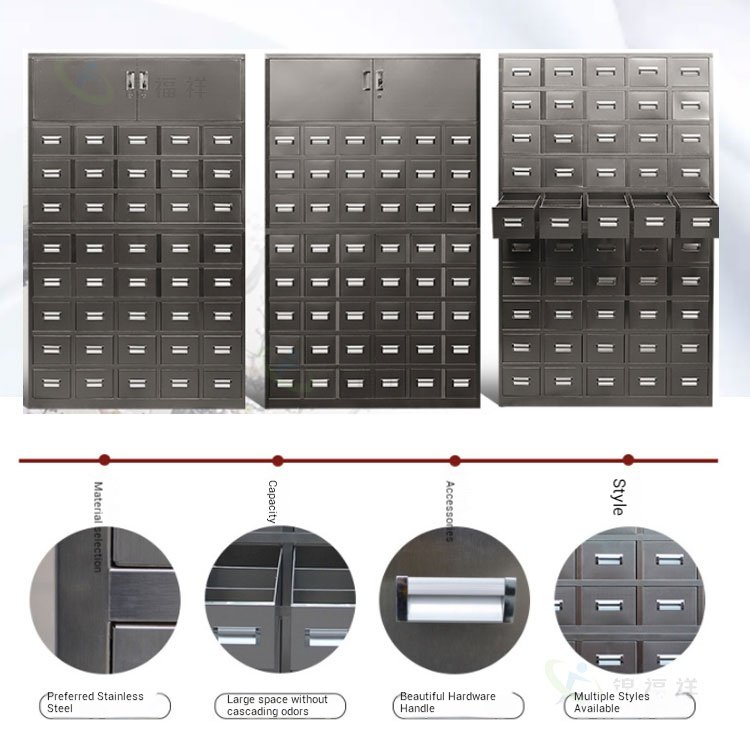
Modern apothecary chests, particularly those crafted from high-grade 201 or 304 stainless steel, offer a non-porous, inert environment. Unlike wood, steel does not react with the herbs, does not absorb odors, and creates an impenetrable barrier against external threats. It represents the bridge between ancient wisdom and modern hygiene standards.
II. 5 Reasons Why Stainless Steel Outperforms Wood for Herb Storage
1. Absolute Moisture and Mold Protection
The primary enemy of dried herbs is humidity. When moisture levels rise above 15%, mold spores begin to colonize. Stainless steel is entirely waterproof and non-absorbent. When combined with precision-engineered drawers, a metal cabinet provides a significantly more stable micro-environment. For clinics located in coastal or high-humidity areas, this feature alone can save thousands of dollars in spoiled inventory.
2. Impenetrable Pest and Rodent Defense
Insects like the “drugstore beetle” (Stegobium paniceum) specialize in infesting dried plant matter. They can burrow into wooden cabinets and hide in the cracks of the joinery. Stainless steel offers no such refuge. Its hard, smooth surface is impossible for insects to penetrate and offers zero grip for rodents. Your herbs remain in a “vault-like” environment, protected from biological contamination.
3. Zero Cross-Contamination of Potency
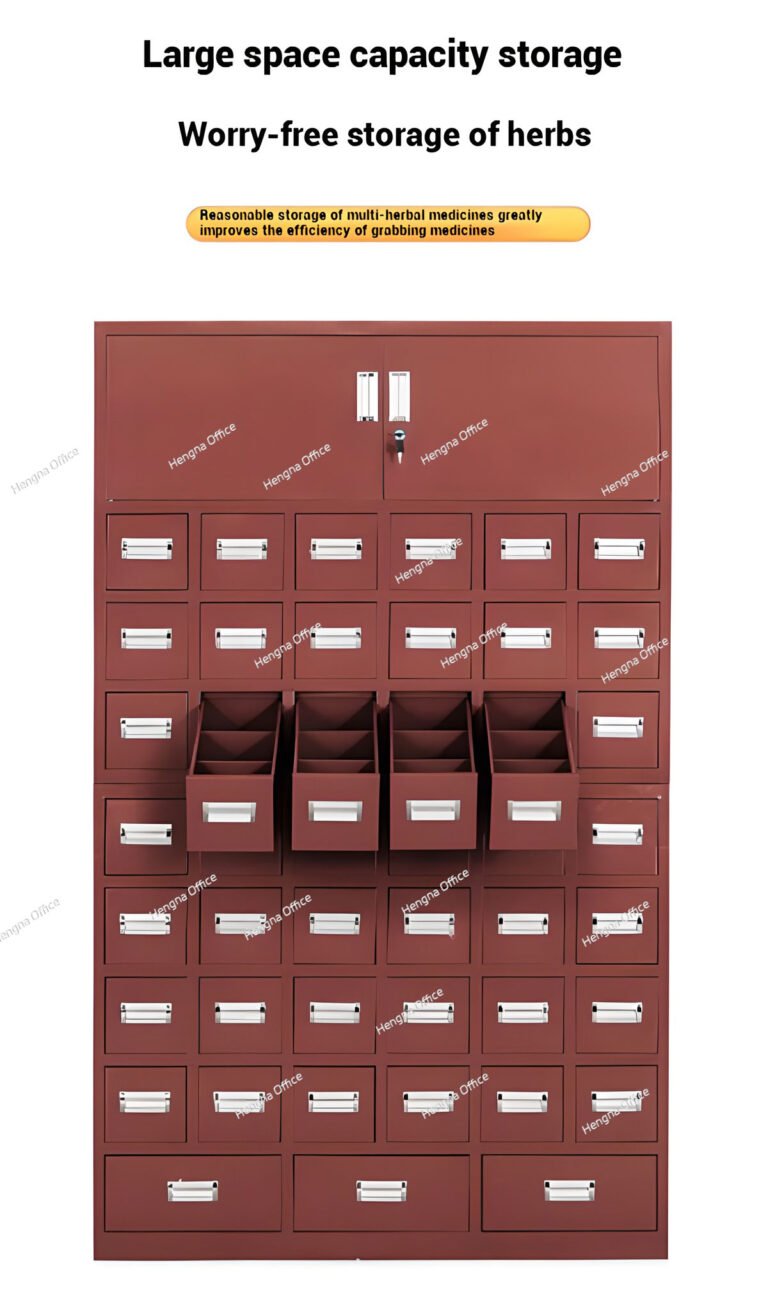
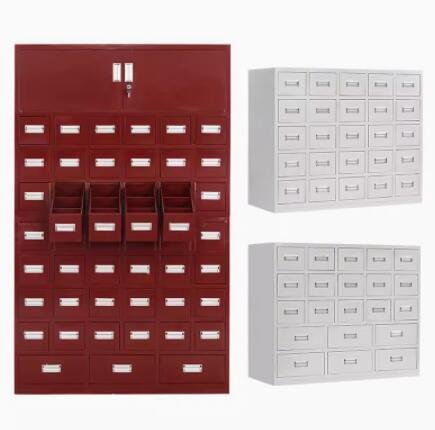
The therapeutic value of herbs lies in their chemical purity. In a wooden cabinet, the pungent aroma of Mentha (Mint) might seep into the delicate drawers of Astragalus (Huang Qi). Stainless steel is chemically inert. You can store the most aromatic spices or bitter barks side-by-side in a 35-drawer unit without fear of flavor or medicinal transfer.
4. Maximized Storage Volume (The Thin-Wall Benefit)
Space is a premium in any clinic or home. To be structurally sound, wooden drawers must have thick walls (usually 10-15mm). Stainless steel, being significantly stronger, can be manufactured with much thinner walls (0.8-1.2mm) while supporting more weight.
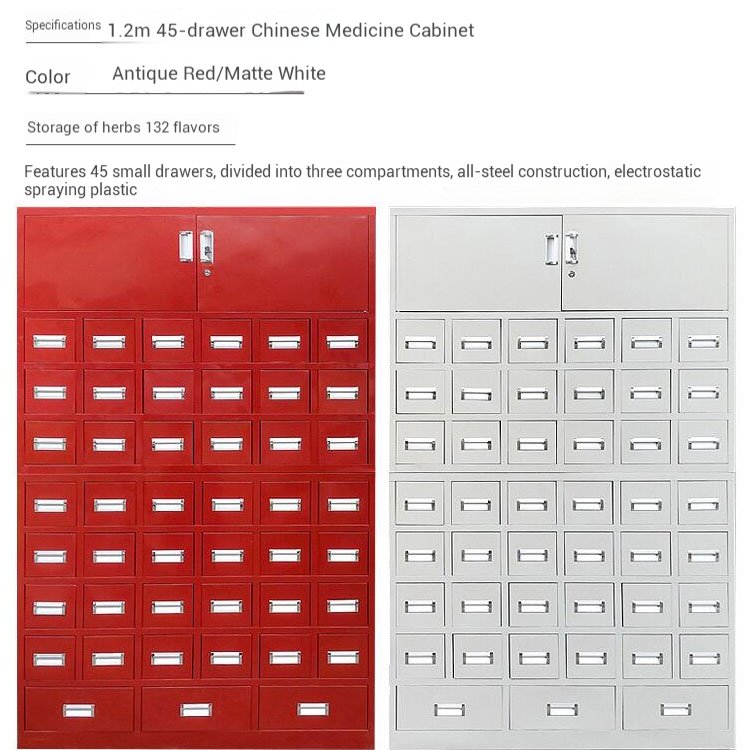
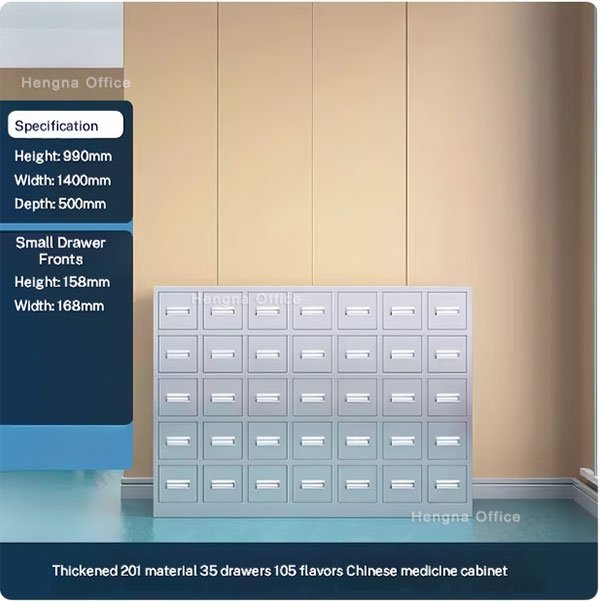
- The Result: In the same external footprint, a stainless steel cabinet (like our H990 x W1400mm model) offers up to 20-30% more internal storage volume than its wooden counterpart.
5. Medical-Grade Hygiene and Easy Sterilization
TCM clinics are increasingly held to the same sanitary standards as modern medical facilities. Wood is difficult to disinfect because chemical cleaners can damage the finish or soak into the grain. Stainless steel is “wipe-and-go.” It can be sanitized with medical-grade alcohol or mild detergents without any risk of degradation, ensuring your storage meets 21st-century health codes.
III. Stainless Steel vs. Wooden Apothecary Chests Aesthetics: The “Modern Apothecary” Trend
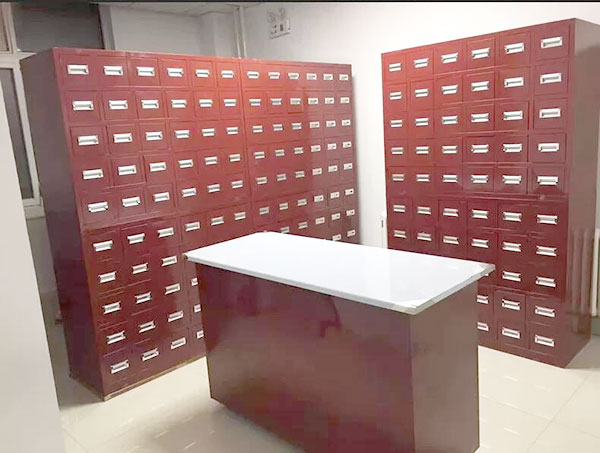
A common misconception is that stainless steel looks “cold” or “industrial.” However, in modern interior design, the Industrial Apothecary look is highly coveted. The sleek, brushed-metal finish of a 35-drawer cabinet provides a minimalist, professional aesthetic that fits perfectly in:
- Boutique Acupuncture Clinics: Signaling precision and cleanliness to patients.
- Modern Kitchens: Serving as a high-end spice and tea station.
- Minimalist Home Decor: Pairing beautifully with indoor greenery and glass jars.
IV. Buying Guide: What to Look for in a Metal Herb Cabinet
Not all metal cabinets are created equal. When sourcing a unit for professional herb storage, look for these three markers of quality:
- Precision Drawer Slides: Since you may be opening these drawers dozens of times a day, ensure the unit uses heavy-duty tracks that operate smoothly even when the drawers are full of dense roots or heavy seeds.
- Label Integrity: Look for cabinets with integrated, high-visibility label holders. This allows for the “One-Second Find” rule—essential for busy practitioners.
- Safety Edges: High-quality stainless steel furniture should have “hemmed” or rounded edges. This prevents nicks and scratches to the hands during fast-paced work.
Choosing between wood and stainless steel isn’t just a matter of style; it’s a decision about the longevity of your medicine. While a wooden chest carries the weight of history, a stainless steel apothecary chest carries the weight of the future. It offers a cleaner, safer, and more efficient way to honor the botanicals you work with.
Whether you are a professional practitioner upgrading your clinic or an enthusiast looking for the ultimate tea and herb organizer, the transition to stainless steel is a step toward scientific preservation and operational excellence.