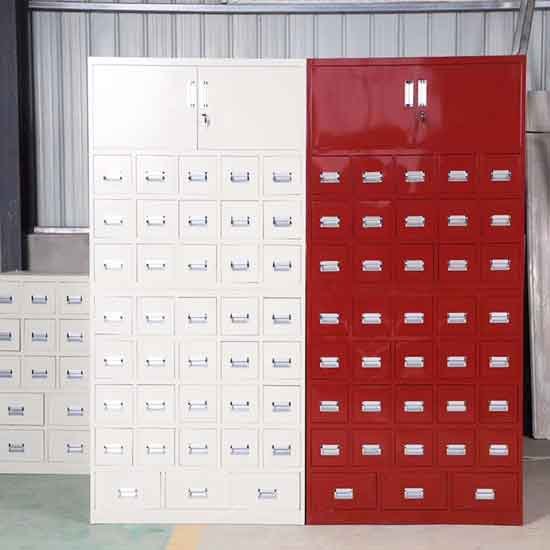
Elevating Pharmacy Standards: Why 304 Stainless Steel is the Only Choice for Modern Dispensaries
In the high-stakes world of pharmaceuticals and healthcare, the environment plays a vital role, just as much as the medications themselves. As global health standards tighten and pharmacy operations become increasingly sophisticated, the furniture designed to store life-saving drugs is undergoing a subtle but essential transformation.
For years, traditional wooden apothecary chests were the go-to. Yet, in today’s modern pharmacy—where hygiene, precision, and durability are paramount—304-grade stainless steel has emerged as the clear material of choice.
In this in-depth guide, we explore why upgrading to stainless steel multi-drawer systems isn’t just about aesthetics anymore, but a crucial investment in safety, efficiency, and long-term return on investment (ROI).
1. The Science of Sanitation: Beyond the Surface
The primary reason 304 stainless steel (often referred to as 18/8 steel due to its 18% chromium and 8% nickel content) dominates the medical field is its non-porous surface.
Unlike wood or low-grade plastics, stainless steel does not harbor microscopic cracks or pores where bacteria, mold, or cross-contaminants can hide. In a dispensary handling various powders, herbs, and liquids, the risk of cross-contamination is a constant threat.
Why 304 Grade?
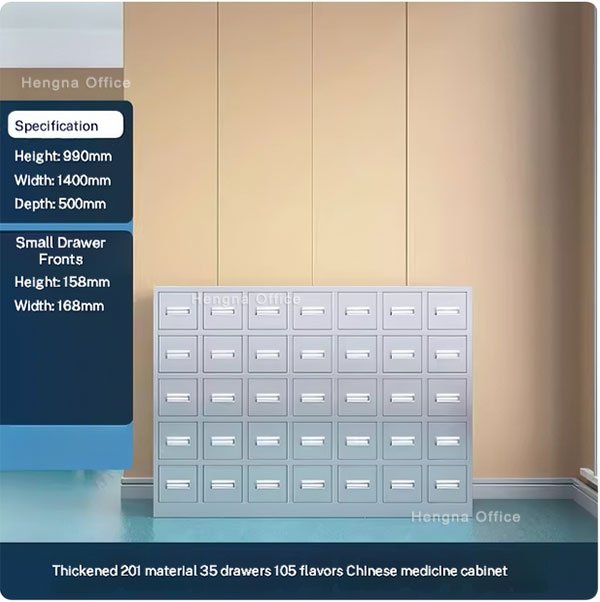
While 201 stainless steel is a common budget alternative, it lacks the high nickel content required to resist corrosion in humid or chemically-intensive environments. 304 stainless steel offers:
- Superior Corrosion Resistance: Essential when using medical-grade disinfectants.
- Antimicrobial Properties: Naturally inhibits the growth of pathogens.
- Chemical Stability: Will not react with medicinal compounds or herbs, ensuring the integrity of the stored products.
2. Comparing Material Standards: 304 Stainless Steel vs. The Alternatives
To understand the value proposition, it is essential to compare 304 stainless steel against traditional and budget-friendly options.
| Feature | 304 Stainless Steel | 201 Stainless Steel | Traditional Wood/MDF |
| Durability | 30+ Years | 15-25 Years | 3-7 Years (Warping/Moisture) |
| Sanitation | Excellent (Non-porous) | Good | Poor (Porous) |
| Chemical Resistance | High | Moderate | Low |
| Maintenance | Low (Wipe & Go) | Moderate | High (Polishing/Repairs) |
| Compliance | Medical/Food Grade | Industrial Grade | Non-Compliant in many regions |
3. Workflow Optimization: The Power of Multi-Drawer Precision
Modern pharmacies handle thousands of SKUs, from tiny vials to bulk herbal compounds. A disorganized dispensary is a dangerous one.
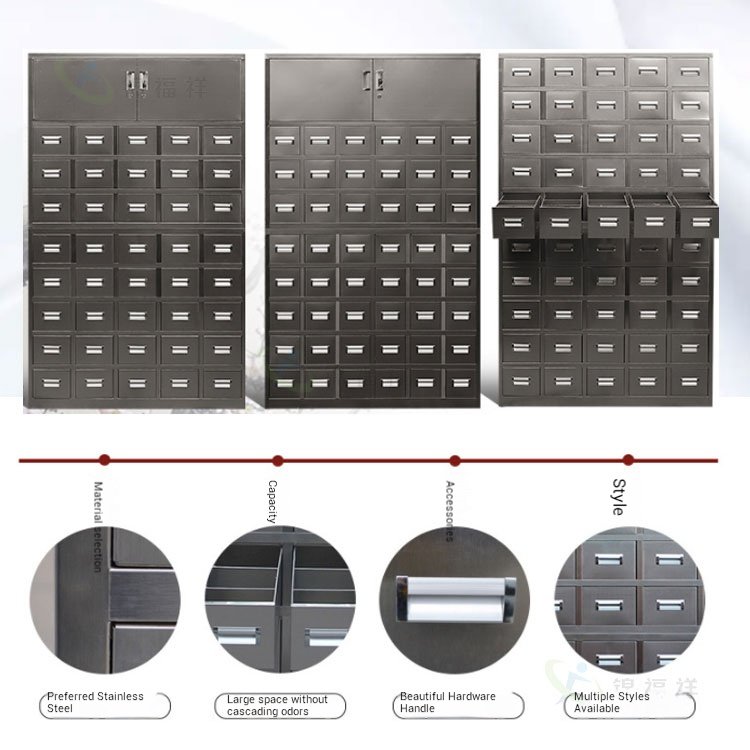
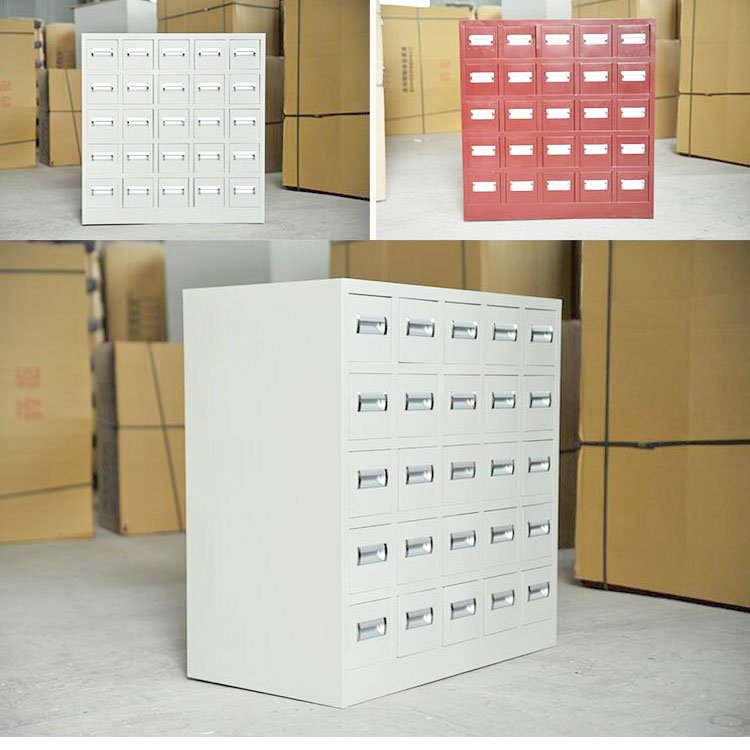
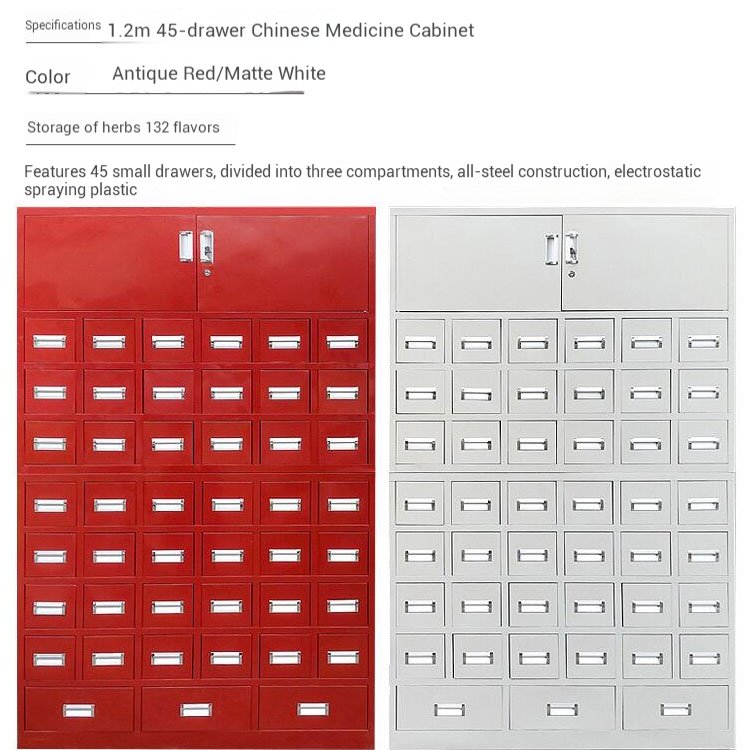
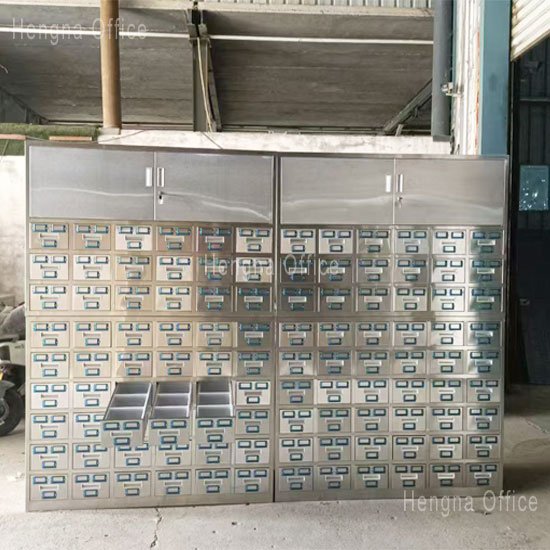
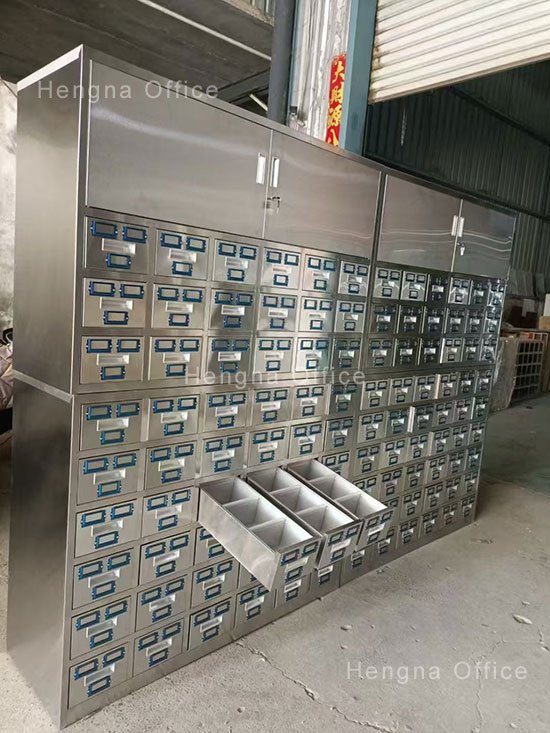
304 stainless steel apothecary cabinets are engineered for high-density storage. By utilizing a multi-drawer system (often featuring 40, 50, or even 100 small drawers), pharmacies can achieve:
- Error Reduction: Dedicated drawers for specific medications prevent “look-alike, sound-alike” (LASA) errors.
- Ergonomic Retrieval: Smooth-glide drawer tracks allow for rapid access during peak hours without physical strain.
- Inventory Control: Integrated label holders on each drawer ensure that every item has a fixed location, simplifying the auditing process.
4. Resilience in Extreme Environments
Dispensaries in coastal regions or high-humidity climates (such as Southeast Asia, the Gulf, or Tropical Africa) face a unique challenge: moisture.
Wood absorbs moisture, leading to mold growth and drawers that “stick.” 201-grade steel can begin to show “tea staining” (surface rust) within months in salty air. 304 stainless steel remains inert. It withstands the humidity required for certain herbal storages and the rigorous sterilization protocols of modern hospitals without degrading.
5. The ROI Factor: Why “Cheap” is Expensive
For B2B buyers and hospital procurement officers, the initial cost of 304 stainless steel furniture can be higher than 201 or wood. However, the Total Cost of Ownership (TCO) tells a different story.
- Zero Replacement Costs: A 304 cabinet is effectively a “buy it once” purchase. It does not warp, rust, or lose structural integrity.
- Labor Savings: Ease of cleaning reduces the man-hours spent on facility maintenance.
- Compliance Assurance: Avoids the risk of failing health inspections or international medical audits (like GMP or ISO standards).
6. Customization for the Modern Professional (OEM/ODM)
No two dispensaries are identical. The shift toward modern standards has increased the demand for bespoke storage solutions.
Whether it is a specialized cabinet for a TCM (Traditional Chinese Medicine) clinic requiring specific drawer depths or a sleek, glass-fronted unit for a luxury aesthetic clinic, stainless steel is highly adaptable.
- Modular Designs: Units can be stacked or placed side-by-side to grow with the pharmacy.
- Secure Storage: Integration of electronic locks or key-code systems for controlled substances.
- Aesthetic Versatility: While “surgical silver” is standard, advanced PVD coatings can provide gold, rose gold, or black finishes without compromising the 304-grade properties.
7. Frequently Asked Questions
How do I identify if a cabinet is real 304 stainless steel?
Professional buyers use a “manganese reagent test” or a handheld XRF analyzer. However, the most reliable way is to partner with a manufacturer that provides Material Test Reports (MTRs) and serves international B2B markets.
Is 304 stainless steel magnetic?
Generally, 304 stainless steel is non-magnetic or only slightly magnetic after cold working (the manufacturing process). This is a quick (though not foolproof) way to distinguish it from many lower-grade steels.
What is the best way to clean 304 pharmacy cabinets?
Simply use warm water and a mild detergent. For medical disinfection, standard alcohol-based solutions or specialized stainless steel cleaners are safe and will not cause pitting.
The transition to 304 stainless steel is more than a trend; it is a response to the global demand for higher medical standards. By choosing medical-grade cabinetry, pharmacies signal to their patients and partners that they prioritize safety, hygiene, and professional excellence.
If you are looking to upgrade your dispensary with high-precision, 304-grade storage solutions, the choice is clear: invest in quality that lasts a lifetime.