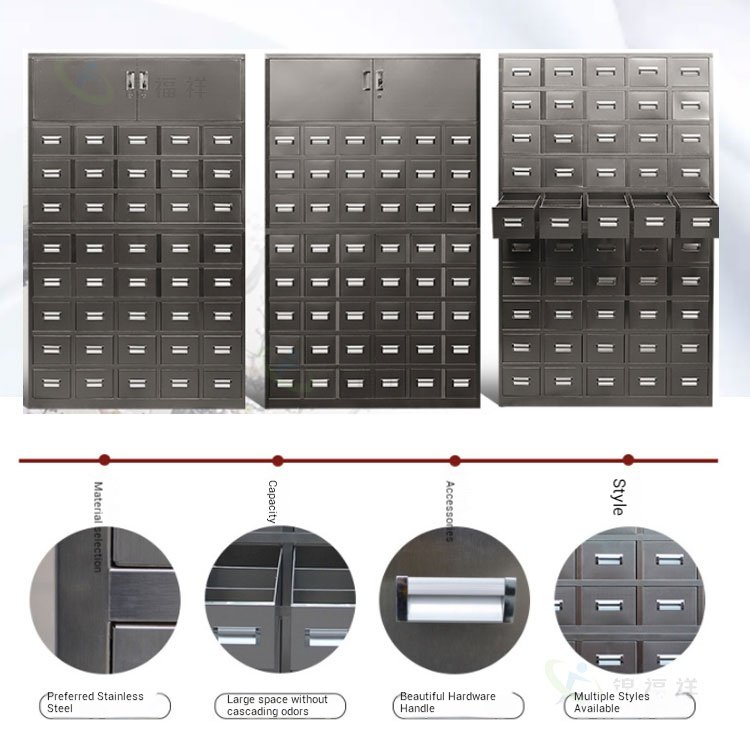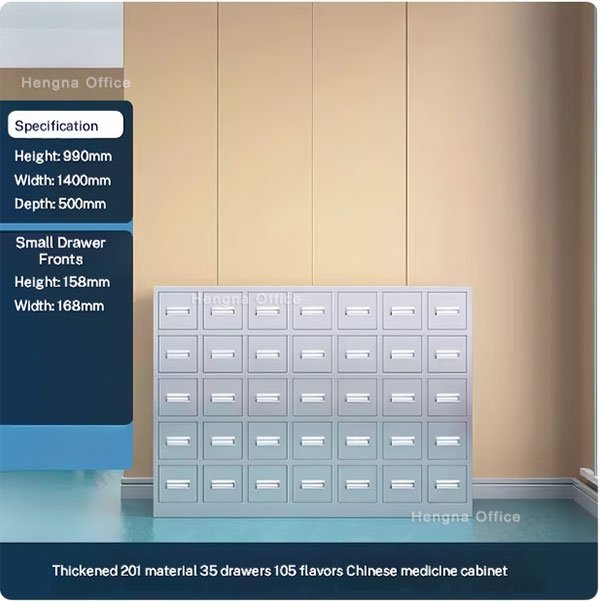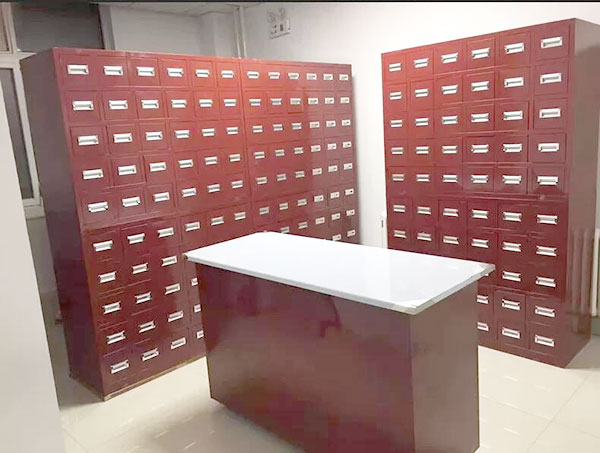
201 Stainless Steel Chinese Medicine Cabinet: Is It Durable Enough for Daily Clinic Use?
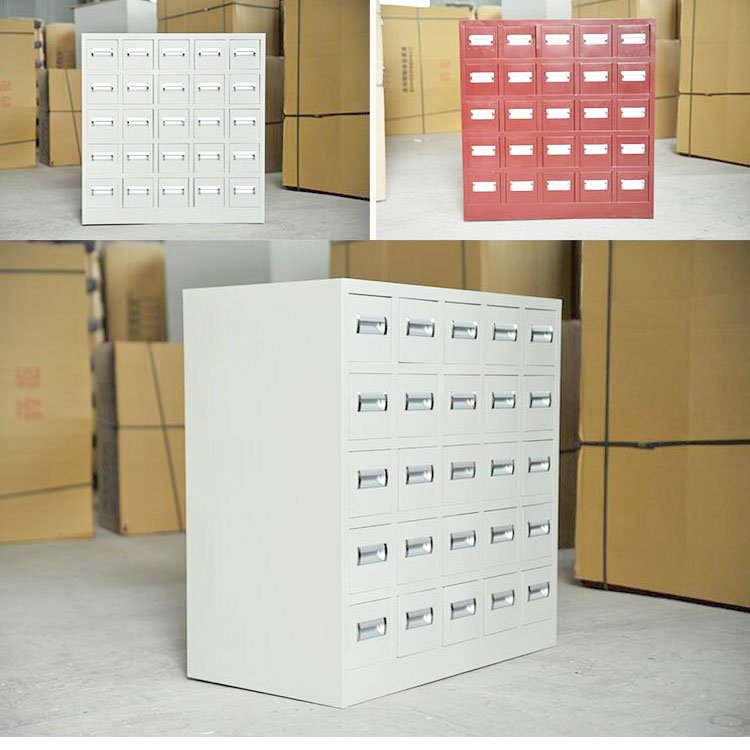
In the daily operations of a Traditional Chinese Medicine (TCM) clinic, the herbal medicine cabinet is the most frequently used piece of equipment. It is the silent workhorse that endures hundreds of drawer openings and closings every day, exposure to volatile herbal oils, and the rigorous demands of medical-grade cleaning protocols.
While 304 stainless steel is widely recognized as the industry “gold standard” for its superior properties, many clinic owners are drawn to the more cost-effective 201 stainless steel options. This raises a critical question: Is 201 stainless steel actually durable enough for a professional clinic, or is it a false economy?
In this comprehensive guide, we will analyze the material science, the unique stressors of a TCM environment, and how to ensure your investment stands the test of time.
I. The Science: 201 vs. 304 Stainless Steel Compared
To understand durability, we must first look at the chemical composition. Stainless steel is an alloy, and the “recipe” determines how it reacts to the world.
1. Corrosion Resistance and Chemical Stability
The primary difference lies in the Nickel and Chromium content.
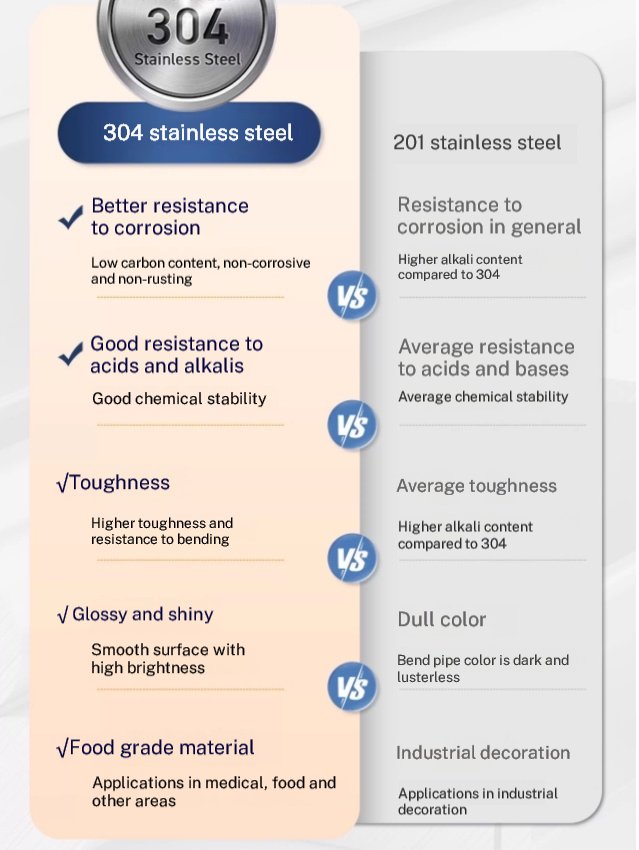
- 304 Stainless Steel: Contains high levels of Nickel ($8-10\%$) and Chromium. This creates a robust “passive layer” that protects the metal from rust, acids, and alkalis.
- 201 Stainless Steel: Replaces much of the expensive Nickel with Manganese and Nitrogen. While this maintains strength, its chemical stability is “average.” In high-humidity environments or when exposed to corrosive herbal residues, 201 is more susceptible to pitting and surface oxidation.
2. Strength and Toughness
- 304 Steel has higher ductility and toughness. It can absorb impacts and resist warping over years of heavy drawer loads.
- 201 Steel is actually harder and more brittle due to the Manganese. While this makes it resistant to dents, it can be more prone to stress cracking at weld points if the craftsmanship is poor.
3. Aesthetics and Surface Quality
304 stainless steel naturally maintains a bright, lustrous finish that looks “medical grade.” 201 has a slightly darker, duller tone. Over time, without proper care, 201 may lose its shine faster than 304.
II. The Clinic “Stress Test”: Challenges for 201 Steel
A TCM clinic is a surprisingly harsh environment for furniture. Here are the three main challenges a 201 stainless steel cabinet must overcome:
1. The Volatile Nature of Herbs
Herbal medicines are chemically complex. Some resins, minerals, and dried roots release volatile organic compounds (VOCs) or micro-dust that can be slightly acidic or alkaline. If these settle on a 201 surface and are not cleaned, they can act as catalysts for localized corrosion.
2. Disinfection Protocols
Post-COVID, clinic hygiene standards are stricter than ever. Many practitioners use chlorine-based disinfectants or strong alcohols. 201 stainless steel is sensitive to chlorides. Repeated exposure to harsh cleaning agents without a clear-water rinse can eventually degrade the surface of a lower-grade steel cabinet.
3. Mechanical Fatigue
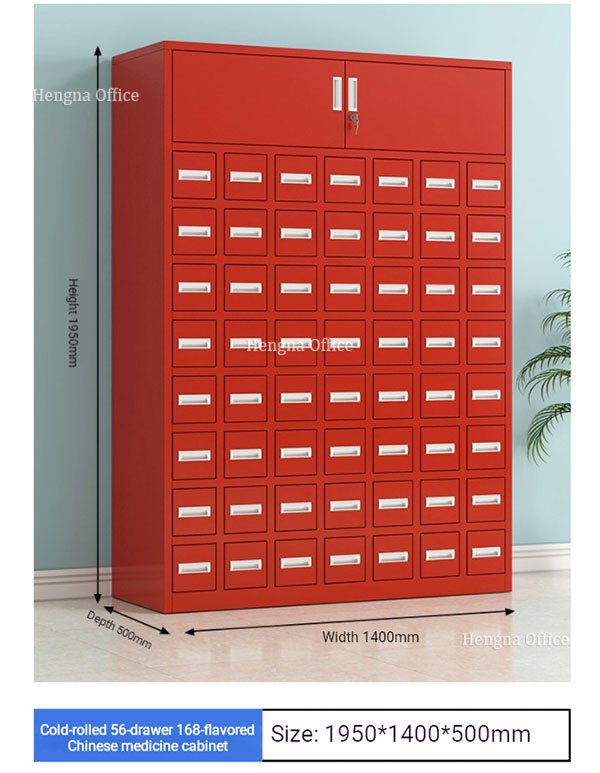
Think about the “rush hour” in a pharmacy. Drawers are pulled, pushed, and occasionally slammed. A standard cabinet might have 40 to 100 drawers. If the cabinet is made of thin 201-grade sheets, the repetitive vibration can lead to “metal fatigue” at the joints faster than a more resilient 304 structure would.
III. How to Make a 201 Stainless Steel Cabinet Work for You
Does this mean you should never buy 201? Absolutely not. For many inland clinics in dry climates, or for practitioners on a startup budget, 201 stainless steel is a highly viable option—provided you know what to look for. To get “304-level” performance out of a 201 cabinet, you must focus on the build quality rather than just the material label.
1. The “Thick Plate” Requirement
Material thickness is more important than the grade when it comes to structural integrity.
- The Standard: Demand a frame thickness of at least 0.7mm to 0.8mm.
- The Benefit: Thicker 201 steel provides the structural rigidity that compensates for its inherent brittleness. A heavy-duty 201 cabinet will often outlast a flimsy, thin-walled 304 cabinet.
2. Superior Welding and Finishing
The “break point” for corrosion in 201 steel is usually at the welds.
- Look for: Uniform, smooth, and polished weld beads.
- Avoid: Any signs of “blueing” (overheating during welding) or rough, jagged joints. High-quality manufacturers will use argon arc welding and post-weld treatment to seal these vulnerable areas.
3. Premium Hardware (The 80/20 Rule)
80% of a cabinet’s perceived durability comes from the drawer slides. Even a 201 steel box will feel like a luxury item if it uses high-quality, silent ball-bearing tracks. Ensure the hardware is rated for high-frequency use. Since the hardware is the part that moves, it takes the brunt of the daily wear and tear.
4. Surface Treatment: Brushed vs. Mirror
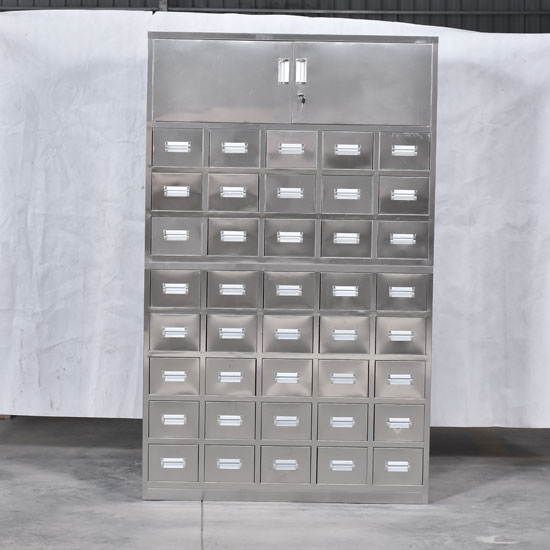
We recommend a high-quality brushed (satin) finish.
- Brushed surfaces hide fingerprints and micro-scratches better than mirror finishes.
- It provides a more modern, professional look that requires less frequent “polishing” to look clean.
IV. Maintenance: The Secret to Longevity
If you choose a 201 stainless steel cabinet, your maintenance routine will determine its lifespan. Follow the “Clean and Dry” rule:
- Immediate Cleaning: If a liquid herb extract or acidic powder spills, wipe it up immediately. Do not let it sit overnight.
- Neutral Cleansers Only: Use pH-neutral soaps. Avoid bleach or scouring pads (which can scratch the protective layer and invite rust).
- The Dry Wipe: After cleaning with a damp cloth, always follow up with a dry microfiber cloth. Moisture is the enemy of 201 steel.
- Quarterly Inspection: Every three months, check the drawer tracks and weld points. A tiny drop of food-grade lubricant on the rails can prevent mechanical stress on the steel frame.
V. Final Verdict: Which One Should You Choose?
Choose 201 Stainless Steel If:
- Your clinic is in a dry, inland region (low humidity).
- Your budget is a primary concern (201 typically costs $20-30\%$ less than 304).
- You have a disciplined staff that follows a strict cleaning and maintenance schedule.
- You are looking for a high-quality “starter” cabinet for a new practice.
Invest in 304 Stainless Steel If:
- Your clinic is in a coastal area or high-humidity tropical climate.
- You use heavy-duty chemical disinfectants daily.
- The cabinet is located near a decoction room (steam and heat).
- You want a “buy it once for life” solution with zero worries about maintenance.
A 201 stainless steel Chinese medicine cabinet is not “low quality”; it is a high-value option that requires a slightly more attentive owner. When built with thickened plates and expert craftsmanship, it can easily provide 10 to 15 years of reliable service in a busy clinic.
By understanding the limitations of the material and focusing on the quality of the construction, you can save on costs without sacrificing the professional standards of your TCM practice.