Walk down any old European pharmacy street and the window display tells you everything: walls of small labeled drawers, brass pulls, the promise that what is behind each label has been kept properly for a very long time. That aesthetic sells — patients read a labeled drawer wall as competence made visible. The steel apothecary counter with drawers brings that look into modern practices without wood’s maintenance, pests, or short lifespan.
This article covers why the apothecary format works in retail settings, what daily work looks like on a steel version, and how to choose the look and size that fits your shop floor.
The Apothecary Look, Rebuilt in Steel
Traditional apothecary furniture was wooden for one reason: that is what existed. The format itself — a wall or counter of dozens of small labeled drawers — is pure function, and function has no material loyalty.
A steel rebuild keeps everything that makes the format work:
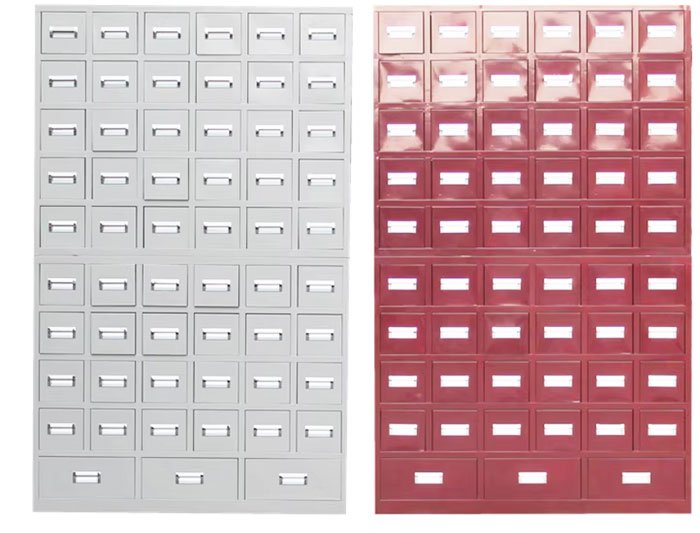
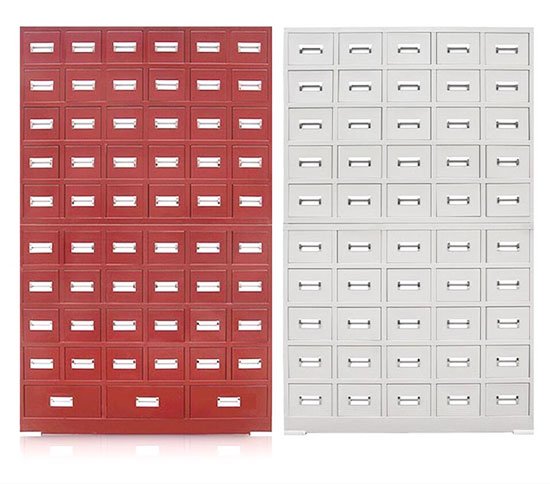
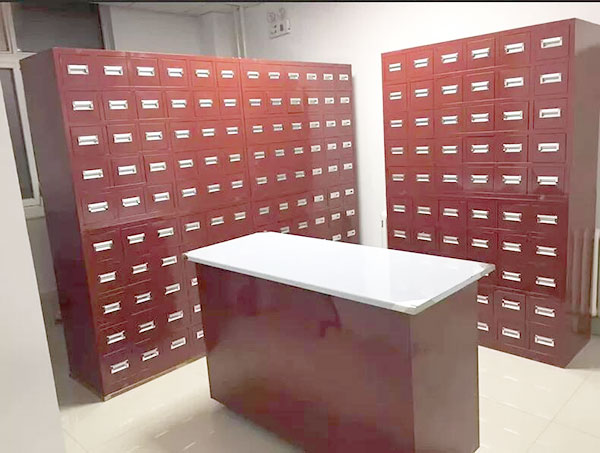
- The drawer grid. Dozens of small drawers, each with a label holder and pull, arranged in the dense rhythmic grid customers recognize instantly.
- Traditional colorways. Wine red with classic proportions reads antique; it is the finish most heritage-styled shops choose.
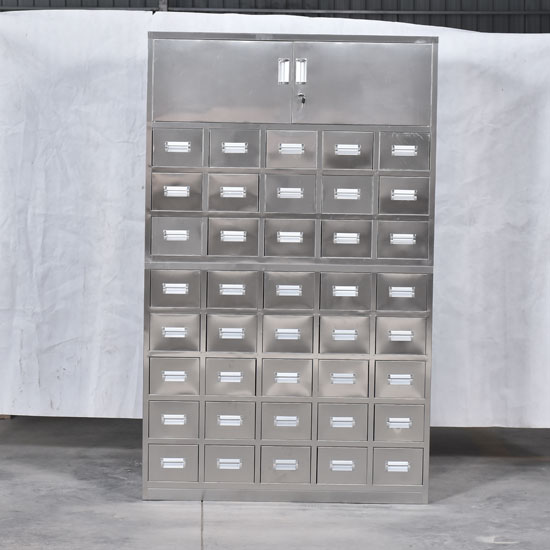
- Modern variants. Grey white and brushed stainless serve apothecaries that lean clinical and contemporary.
- Steel behavior underneath. No swelling in humid summers, no termite risk, no refinishing cycles — the look holds because the material holds.
Why Drawers Beat Shelves in a Retail Apothecary
Open shelving shows jars; drawers hold inventory. For a working apothecary that dispenses by weight, the drawer wins the daily argument:
- Herbs stay dark. Light bleaches active compounds. A drawer wall stores every batch in darkness until the moment it is pulled.
- Aromas stay put. Sealed drawers keep the mint from the cinnamon — and the shop smelling of the day’s blends, not a blended mush of everything.
- Stock is countable. Opening a drawer shows exactly what remains. Shelves hide depletion behind the front row.
- The wall is the menu. Labeled drawers signal range and seriousness to every customer who walks in — retail psychology built into the furniture.
What Daily Work Looks Like
A counter-based apothecary runs a short, repeatable loop:
- Customer order arrives — a formula, a blend, or a single herb at a set weight.
- Pull from the grid — the drawer layout puts bestsellers at hand height; labels are checked, not remembered.
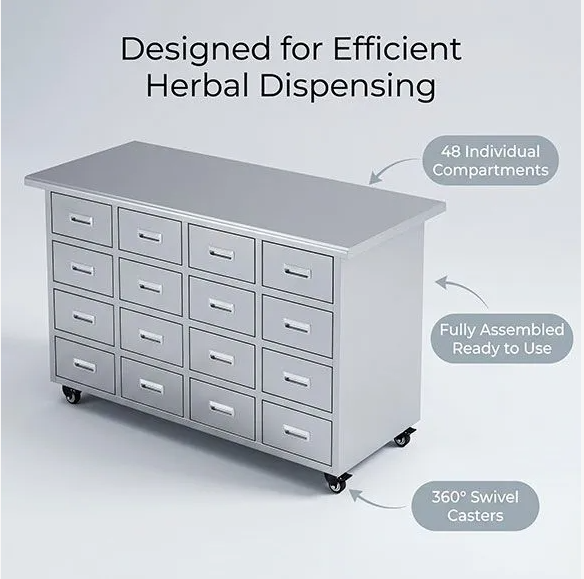
- Weigh on the counter surface — the stainless top doubles as the scale station, wiped between customers.
- Pack and label — paper bags, jars, or sealed pouches, named and dated at the same bench.
- Refill on sight — a drawer opened low gets a restock note before it is closed.
Five touches, one station, no back-room trips for the herbs that matter. That is the whole operating model — which is why the counter’s drawer layout deserves more thought than its color.
Choosing the Look: Wine Red, Grey White, or Stainless
The finish decides what kind of shop the customer thinks they walked into:
- Wine red — the heritage play. Warmth, tradition, the classical apothecary. Pairs with wood counters, brass details, and warm lighting.
- Grey white — the clean modern play. Reads clinical-fresh; suits wellness-focused apothecaries and bright, minimal interiors.
- Stainless — the professional play. Says “we also do this at pharmaceutical standard”; common where the shop blends retail with a clinic back room.
None of them changes what the steel does — powder-coated or brushed, the behavior (hygiene, humidity resistance, drawer precision) is identical. Choose by the room, not the spec sheet.

Three Counter Layouts That Work
The drawer wall serves different shop shapes differently. Three layouts cover most apothecaries:
- The service bench. A counter-height unit behind the serving position — drawers face staff, the top hosts the scale. Best for shops where most customers buy blends dispensed on the spot.
- The display wall. A tall drawer tower visible from the entrance — the aesthetic centerpiece that also stores the slow-moving range. Best for heritage interiors and photo-led brands.
- The L-combination. Counter at the service point, tower on the return wall — the working triangle closes on itself and nothing is more than two steps away. Best for shops doing real dispensing volume.
Whichever shape the shop takes, keep the bestsellers in the drawers closest to the scale — the wall can be beautiful anywhere, but the fast movers belong where hands already are.
Sizing for a Shop Floor
Match the unit to the floor, with one size of headroom:
| Shop Type | Working Herb Range | Recommended Format |
|---|---|---|
| Boutique apothecary counter | 60–100 herbs | Single counter unit, 24–35 drawers |
| Neighborhood herbal shop | 100–200 herbs | Counter + one tall cabinet wall |
| Full-line dispensary retail | 200+ herbs | Counter row plus drawer-wall towers |
Counter-height units double as the service bench — scale, packing, and payment on top, working stock below. Tall units maximize the drawer-wall effect that defines the aesthetic.
FAQ
Will a steel drawer wall look cheap compared to antique wood?
Not in wine red with classic proportions — the grid, label holders, and pulls carry the aesthetic. Most customers register “proper apothecary,” not material. The antique trade still buys wood; working apothecaries increasingly buy steel.
Can drawers be divided for small-batch herbs?
Yes. Internal dividers split one drawer into two or three compartments, so the grid holds more distinct items than its drawer count suggests.
How do the label holders work?
Each drawer face has a built-in slot for a card label — name, origin, batch date. Cards swap in seconds and stay readable in humid shop conditions, unlike adhesive labels.
Is custom sizing possible for a specific counter niche?
Yes. Width, height, drawer count, and finish are all configurable on OEM orders — common for fitting a counter into an existing timber bench run.
What about cleaning in a dusty retail environment?
A weekly wipe of drawer faces and a monthly pass across label cards covers it. Steel finishes take the handling without the refinishing wood demands.
How does a steel wall handle shop lighting and window sun?
Powder-coated steel does not fade indoors the way finished wood does, and the drawers keep herbs in the dark regardless of where the wall stands. A position near a window is a display bonus rather than a storage risk — for the furniture; keep light-sensitive stock in the drawers either way.
How many label cards should I order with the counter?
More than the drawer count. Between reprints, rebranding, and the herbs that change names or batches, most shops burn through spares quickly. Order a full set plus fifty percent — cards are inexpensive, and a hand-written temporary label undermines exactly the impression the wall is built to make.
Does the drawer grid work for non-herb stock?
It does — teas, accessories, small-batch skincare, and packaged blends all live happily in labeled drawers. Many apothecaries dedicate the lower rows to packaged goods and keep the visible upper wall for the herb range, so the aesthetic stays intact while the stock list grows beyond loose herbs.
Heritage Looks, Modern Discipline
The apothecary counter endures because it does two jobs at once: it stores herbs the way they deserve, and it tells every customer a story about the shop’s standards. Steel keeps the story and drops the upkeep. For shops that want the look to last as long as the business, that trade is easy to make.
Compare finishes in our steel herbal storage cabinet range, or read where steel wins against wooden cabinets in a working apothecary.