The seven checks that decide the right machine
Most decoction machine mistakes are made before the machine arrives. The wrong voltage, an oversized pot, no spare filter cylinder — each one is easy to fix on paper and expensive to fix after the order ships. This herbal decoction machine buying guide lays out the seven checks that matter for a new clinic, in the order they matter: capacity, voltage, cleaning, packing, build, spares and paperwork. Work through them once, and the machine you order is the machine you can actually run.
Check 1 — Capacity: match the pot to daily prescriptions
Buy for the number of doses you fill, not for what looks impressive in a showroom. A machine that is too big heats slowly and costs more to clean. A machine that is too small forces a second batch in the middle of consultation hours, when your staff is already busy.
| Daily doses | Pot size | Why |
|---|---|---|
| Up to 30 | 10–15L | One small batch covers a morning |
| 30–150 | 20L | The workhorse size for most clinics |
| 150+ | 30L, or two 20L units | Central decoction room or shift coverage |
These are working ranges, not promises. If your clinic sits near a boundary, round up rather than down — running a slightly larger pot at partial load beats running a small pot twice a day.
To set your number honestly, count prescriptions from the busiest week in the last month, not the average week. The machine has to survive your peak, because the peak is exactly when a failure hurts most — patients waiting, staff stretched, and no second unit on the floor.
Check 2 — Voltage: match the machine to your grid
Most decoction machines ship at 220V. If your country runs 110V or 240V, confirm the configuration in writing before you pay. A transformer added after delivery is a permanent headache: it takes counter space, generates heat, and becomes one more thing to fail. One sentence in the quotation settles it.
Check 3 — Cleaning: minutes, not an hour
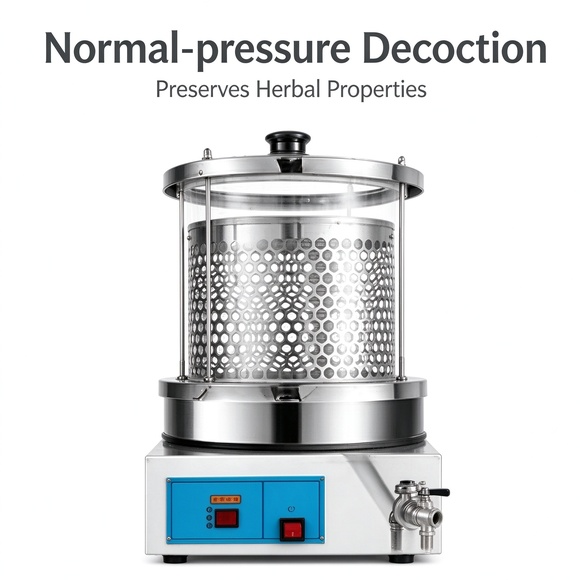
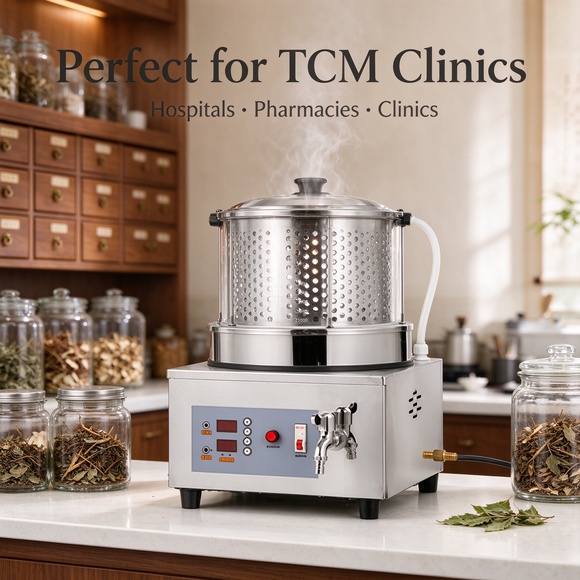
A machine that is hard to clean gets cleaned less, and a machine that is cleaned less fails early. Look for three things: a drain valve to empty the chamber, a removable filter cylinder that rinses under a tap, and no corners where residue collects. Ask the supplier how the machine is cleaned at the end of a shift. If the answer takes longer than a paragraph, keep shopping.
Picture your own staff doing that routine at 7pm, after a full day of consultations. If the steps involve lifting the whole unit or tools you do not keep on site, the machine will not get cleaned as often as it should. A decoction machine is a production tool first — design for the person who empties it, not the person who admires it in a catalogue.
Check 4 — Packing: bags, bottles, or both
Decide how the finished decoction reaches the patient before you order, not after. Three options are common:
- Sealed single-dose bags — the patient gets a measured dose; an auto-packing machine seals bags as part of the cycle.
- Bottles or jars — cheaper equipment, but someone fills each bottle by hand.
- Both — some clinics bag take-home doses and bottle in-house servings.
If you choose bags, settle the size early. A 150ml bag versus a 200ml bag changes your daily bag count by roughly a third, and that number drives the machine size you need.
Check 5 — Build: steel, seams, and switches
Ask four questions about the machine itself. Is the body stainless steel? Are the seams welded or spot-assembled? Is the heating element reachable for service? Where is the machine manufactured? A commercial-grade build handles daily pharmacy use; you do not need to pay for a medical-grade rating unless your market or contract requires one. Get the answers in the quotation, not from a sales call.
Check 6 — Spares: the parts you will need before you need them
Every decoction machine wears out the same three parts: filter cylinders, hoses, and heating elements. Ask two questions: how long do spares take to arrive, and can you order a spare set with the machine? Clinics that order one spare filter cylinder at the start never stop production for a basket that is still drying.
Check 7 — Paperwork: MOQ, lead time, and documents
The last check is the one that sinks new clinics when it goes wrong. Confirm in writing:
- MOQ — can you buy one unit, or do you need a volume order?
- Lead time — production days plus shipping to your port.
- Packing — export carton, pallet size, and weight for freight.
- Documents — commercial invoice and any certificates your market requires for import.
If a supplier hesitates on any of these four, treat it as the answer.
One more question worth asking before you sign: what happens if the unit arrives damaged. A serious supplier states the policy in writing — swap, repair, or parts. That paragraph costs nothing to write and saves you weeks if the freight company mishandles the carton.
Mistakes that cost first-time buyers
- Buying the biggest pot available — you pay for heating and cleaning time you never use.
- Ignoring voltage until delivery — then paying for a transformer that sits on the counter forever.
- Skipping the spare filter cylinder — production stops for a part that costs little.
- Assuming the price includes everything — freight, customs, and accessories often appear on a second invoice.
- Not testing the after-sales response — send a pre-sale question and see how long the reply takes. That speed is what you will get after payment.
Frequently asked questions
How do I choose a herbal decoction machine for a new clinic?
Work through seven checks: capacity, voltage, cleaning, packing, build, spares and paperwork. Capacity comes first — most new clinics run 30–150 daily doses and start with a 20L machine, while smaller practices manage with 10–15L.
Can I use the machine at 110V?
Yes, on request. Confirm the voltage configuration in writing when you order — do not plan around a transformer.
How long does cleaning take?
With a drain valve and removable filter cylinder, cleaning runs in minutes per batch. Ask the supplier for their cleaning routine before ordering.
Do I need the auto-packing version?
Only if you plan to hand patients sealed single-dose bags. If you bottle decoction by hand, a standard machine without packing is enough.
What documents do I need for import?
Start with a commercial invoice and check the certificate requirements for your market with a local customs broker. Ask the supplier to list what they can provide.
Ordering from HNJUNTUO
Choosing a herbal decoction machine for a new clinic comes down to the seven checks above — capacity, voltage, cleaning, packing, build, spares and paperwork. The supplier you pick should answer all seven in writing, without a sales call in between.
HNJUNTUO is the export brand of Luoyang Hengna Office Furniture Co., Ltd., a Chinese manufacturer that ships TCM cabinets, herbal counters and decoction machines to clinics across the Middle East, Southeast Asia, Africa and Australia. Every machine leaves our plant with the specs in writing — voltage, capacity, packing and lead time.
Send us your daily prescription volume, your local voltage and your preferred bag size. You will get a written quotation within 24 hours, with MOQ, lead time and packing confirmed on paper.