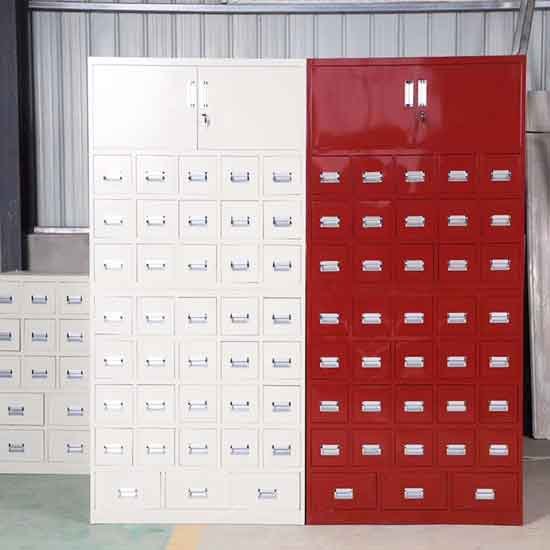
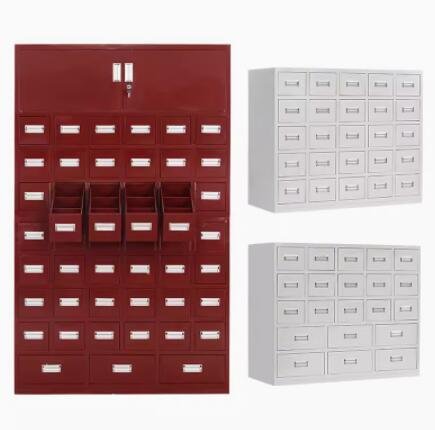
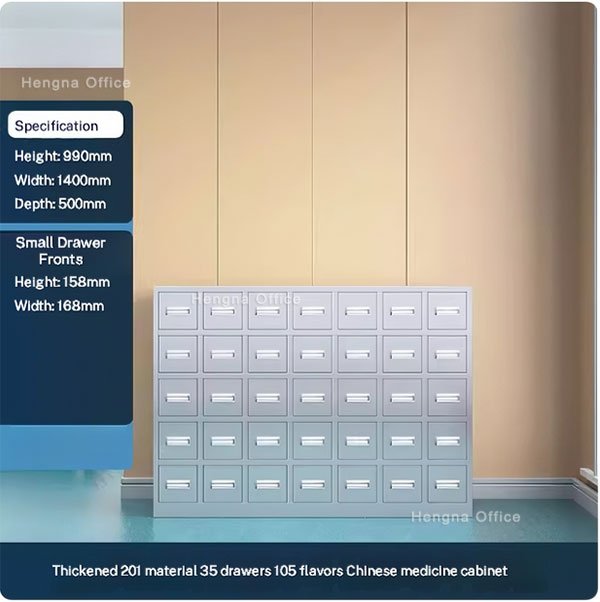
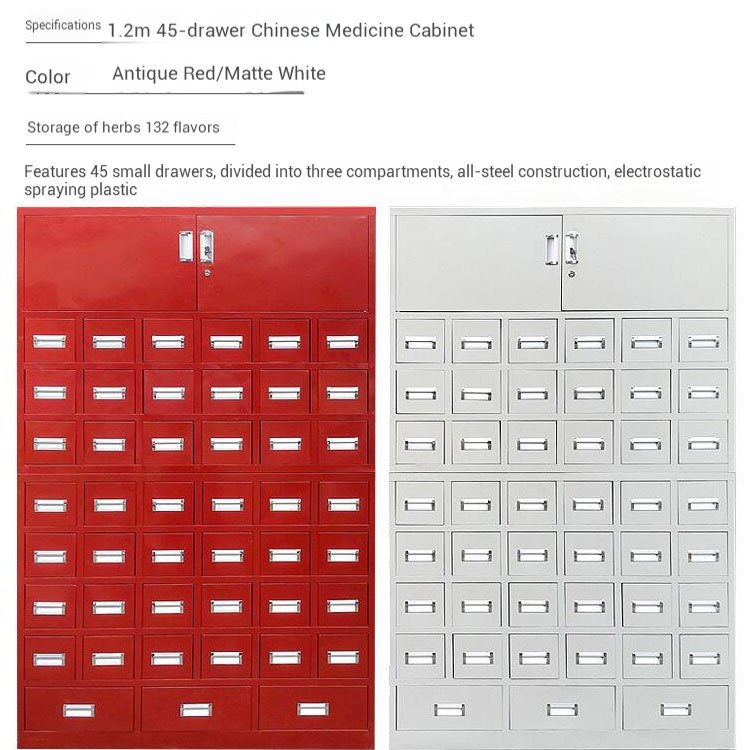
Prescription accuracy in a TCM clinic does not start when the practitioner picks up the scale. It starts with where the herbs live. A clinic that stores herbs well fills prescriptions faster, wastes less stock, and makes fewer errors — and the single piece of furniture that drives most of that improvement is a steel Chinese medicine cabinet.
This article walks through how a drawer-based steel cabinet changes daily clinic work, what it protects your herbs from, and how to choose a configuration that fits your room and your herb list.
The Real Cost of Poor Herb Storage
Storage problems rarely announce themselves. They show up as small daily frictions:
- Extra steps. Herbs spread across shelves and cupboards mean 10 to 20 stops per prescription instead of one sweep of a single cabinet.
- Slow refills. Stock hidden behind stock goes unnoticed until a dispenser opens an empty jar mid-prescription.
- Cross-contamination. Open bins let powders drift and strong aromas — mint, cinnamon, angelica — bleed into delicate neighbors.
- Quality drift. Moisture, light, and dust slowly erode potency long before anyone notices a smell change.
- Patient impressions. A tidy, labeled cabinet wall signals competence. A cluttered shelf does the opposite.
Each friction is small. Together they decide whether a busy clinic feels calm or chaotic at peak hours.
How a Multi-Drawer Cabinet Changes the Daily Workflow
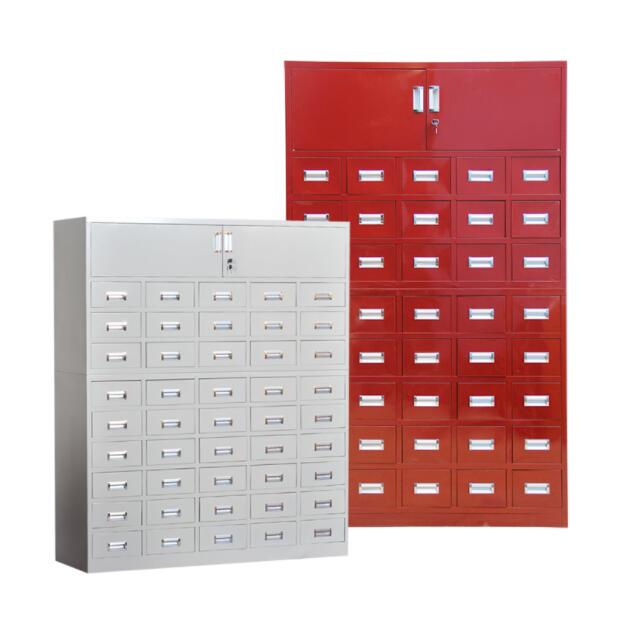
A steel herbal storage cabinet replaces searching with routine. The drawer grid creates fixed positions, and fixed positions create speed:
- Zone the cabinet. Top rows for daily-use herbs at eye and chest height. Middle rows for occasional ingredients. Bottom rows for bulk stock. A lockable top section for controlled or toxic items.
- Label every drawer. Name in pinyin and English, plus its function class. Staff learn the grid within days; the labels stay for verification and new staff.
- Fill prescriptions in one sweep. Read the prescription, walk the row once, pull each drawer in order, weigh, close, move on.
- Refill on sight. Any drawer running low gets flagged the moment it is opened — no mid-week stock surprises.
Why Steel Outperforms Wood in Clinic Conditions
Clinics are hard environments for furniture: humidity swings, daily cleaning, herb oils, and constant drawer traffic.
Wood absorbs moisture, holds odors from previous batches, and eventually attracts pests. Steel does none of those things. A cold-rolled steel body with powder coating, or 201/304 stainless in humid regions, wipes clean with disinfectant, does not absorb herb oils, and keeps drawers sealing properly for years. Herbs stored in sealed steel drawers keep their potency longer — especially through wet seasons.
For the full material comparison — lifespan, cost over time, climate fit — see our detailed guide on steel vs wooden herbal cabinets.
Labeling That Prevents Errors
Most dispensing errors trace back to identification, not to knowledge. Two herbs with similar names, two roots that look alike, a rushed afternoon — and the wrong drawer gets pulled. A TCM herb drawer cabinet reduces that risk with structure:
- One herb, one labeled drawer. The label slot sits on the drawer face, visible without opening anything.
- Dual-language labels. Pinyin plus English keeps mixed teams and visiting practitioners accurate.
- Color codes for species or caution levels. Some clinics tag restricted herbs with a second colored card inside the lockable section.
- Slots, not stickers. Adhesive labels curl and fade in humid rooms; card labels in slots stay readable for years and swap in seconds.
The label habit matters as much as the hardware. Clinics that rewrite labels the day an herb moves — instead of promising to fix them later — keep their error rate near zero. The cabinet’s built-in slots make that discipline easy to keep.
A Morning in a Well-Organized Clinic
To see the difference concretely, compare two versions of the same busy morning.
Before: The first prescription lists 14 herbs. The dispenser checks three shelves, opens two cupboards, and asks a colleague where the dried tangerine peel went. Weighing happens on a scale parked next to a stack of boxes. Twelve minutes later, the prescription is packed — and the second patient has been waiting.
After: Same prescription. The dispenser walks one row of the cabinet, pulls 14 labeled drawers in order, weighs each herb on the counter beside the cabinet, and packs. Seven minutes from prescription to paper bag — most of it spent weighing, not searching. The lockable section stays closed except for the one prescription that needs it.
Neither scenario involves expensive technology. The difference is a cabinet that gives every herb one fixed, labeled, protected place.

Choosing the Right Configuration
Match cabinet size to your herb list and your room — then leave one size of headroom for growth:
| Cabinet Width | Typical Herb Capacity | Fits |
|---|---|---|
| 0.9 m | ~100–150 compartments | Consulting-room corners, solo practices |
| 1.2 m | ~150–250 compartments | Standard clinic dispensing walls |
| 1.4 m and up | 250+ compartments | High-volume pharmacies, teaching dispensaries |
Tall units maximize wall space; counter-height units pair with a work surface or serve under a window. Deep drawers (120 mm and more) handle roots and rolled barks; shallow rows suit flowers, leaves, and powders. A mixed-depth configuration often works best.
Beyond TCM Clinics
The same storage logic travels well:
- Acupuncture centers — a compact cabinet for the 30 to 60 herbs actually prescribed in-house
- Herbal pharmacies — full wall grids with bulk storage below and daily herbs at hand height
- Wellness centers and spas — tidy, odor-controlled storage for teas, packs, and bath blends
- Medicine schools — teaching dispensaries where students practice identification drawer by drawer
FAQ
How many drawers does a small clinic actually need?
Most solo practices run comfortably on 36 to 48 drawers for a focused herb list. If you stock specialty or seasonal items beyond the staples, plan for 60 or pair with a second unit.
Will steel drawers affect herb quality?
No. Steel is inert — it does not off-gas, absorb oils, or hold odors. Sealed drawers actually extend potency by blocking moisture, light, and dust.
Which steel grade suits a humid climate?
201 stainless handles most indoor clinic conditions; choose 304 stainless for coastal locations or heavy daily disinfectant use. Powder-coated cold-rolled steel is the budget option for dry inland climates.
Can the cabinet be customized to my room layout?
Yes. Width, height, drawer count, colors, and lockable sections are all customizable through OEM/ODM orders. Standard manufacturing lead time runs two to four weeks depending on specification.
How do I clean and maintain a steel cabinet?
Wipe drawer interiors on a rotating schedule with a dry cloth, and disinfect surfaces weekly with a mild solution. Check slides twice a year. With that routine, a powder-coated or stainless cabinet holds its finish and slide action for well over a decade.
What about mixing cabinet heights in one room?
It works well when planned. A common layout puts a counter-height cabinet under a window or beside a work table, with full-height units along the main wall. Order from the same manufacturer so finishes match and drawer sizes stay consistent.
The Bottom Line
A steel Chinese medicine cabinet is not just furniture — it is the operating system of a dispensing clinic. Fixed positions cut search time to zero, sealed steel drawers protect potency, and labeled rows turn new staff into safe staff within a week. If your herbs currently live on open shelves, this is the upgrade with the biggest day-one impact on your workflow.
Next steps: compare models in our steel herbal storage cabinet range, or read how to choose the right drawer size before ordering.