A TCM clinic in Guangzhou learned this the hard way in 2024. They bought wooden cabinets from a local supplier. Three months later, patients started complaining about headaches and eye irritation during longer acupuncture sessions. Air quality testing showed formaldehyde levels at 0.18 mg/m³ — nearly double the WHO guideline of 0.1 mg/m³.
The source: cheap MDF panels in the cabinet body off-gassing formaldehyde into a closed treatment room.
This is not an isolated case. Formaldehyde exposure from furniture is a growing concern in healthcare settings worldwide. And for TCM clinics, where patients sit in enclosed rooms for 30–60 minute sessions, the risk is higher than in a typical office.
What Is Formaldehyde and Why Does It End Up in Cabinets?

Formaldehyde (HCHO) is a colorless gas with a sharp smell. It is used in:
When these materials are new, they release formaldehyde gas into the air. This process is called off-gassing. It peaks in the first 3–6 months but can continue for years at lower levels.
In a TCM clinic, the problem is worse than in a regular room because:
Formaldehyde Exposure Limits: What the Rules Say
Different countries set different limits, but they cluster around the same range:
Most countries align around 0.08–0.12 mg/m³ as the safe threshold. A new MDF cabinet can emit 0.3–0.8 mg/m³ in the first month — three to eight times the safe limit.
For a TCM clinic, this creates a specific problem:
Steel Cabinets: The Formaldehyde-Free Answer
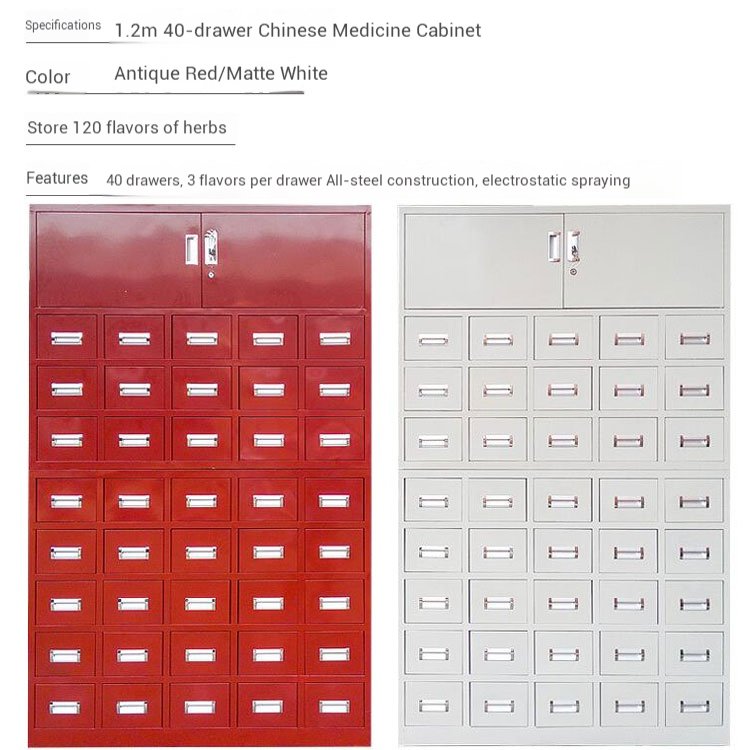
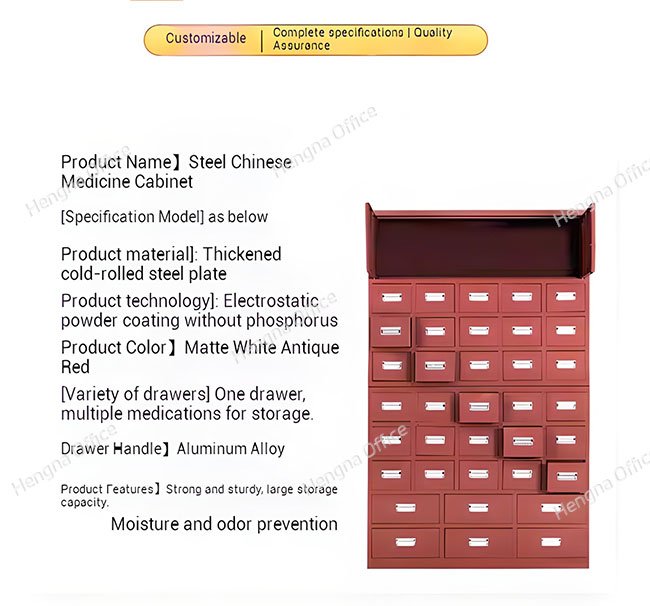
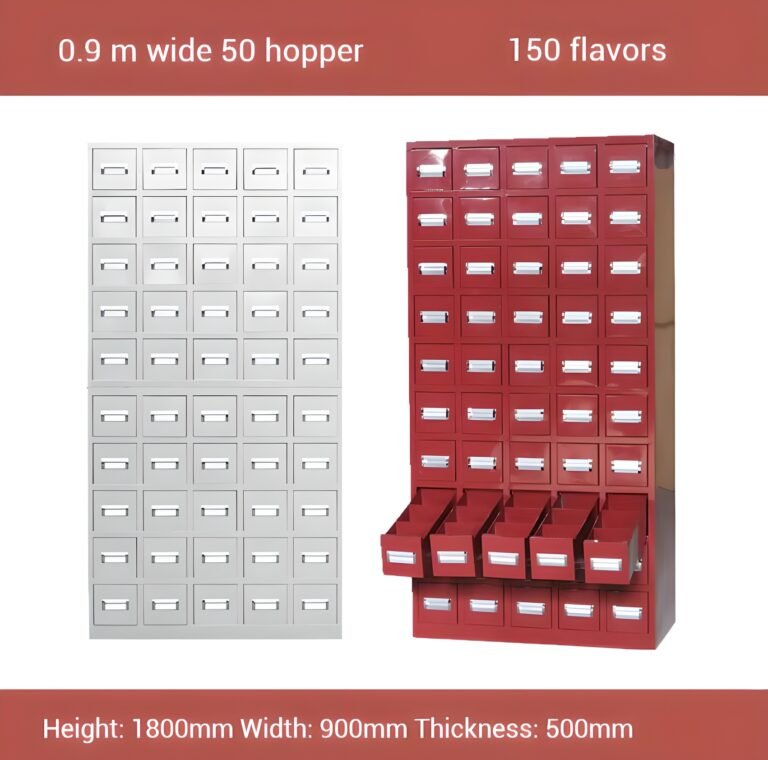
Steel cabinets contain zero wood, zero MDF, zero urea-formaldehyde glue. The main components are:
The result: zero formaldehyde emissions. No off-gassing period. You can install a steel cabinet in a treatment room and use it the same day.
Powder Coating Safety
Some people ask whether powder coating itself is safe. The answer is yes:
Stainless Steel: Even Cleaner
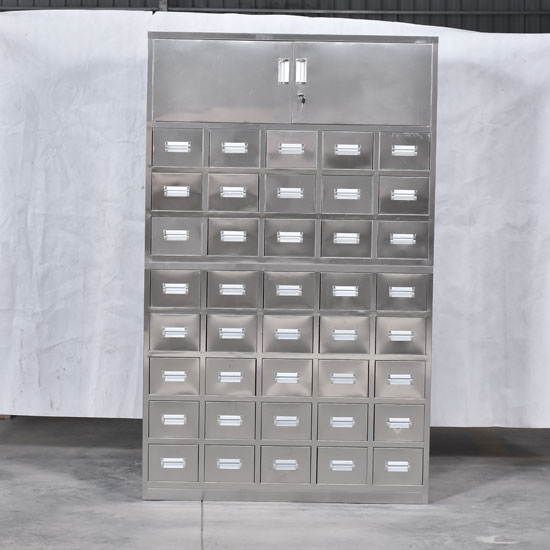
304 stainless steel requires no coating at all. The chromium-nickel alloy naturally resists corrosion and staining. It is the same material used in surgical instruments and pharmaceutical equipment. For TCM clinics that want the cleanest possible storage, 304 stainless steel is the gold standard.
Air Quality Test Results: Steel vs Wood in a Treatment Room

We reviewed air quality data from three TCM clinics that switched from wooden to steel cabinets. The results were consistent across all three locations:
In all three cases, formaldehyde dropped to near-zero levels within 24 hours of installing steel cabinets. No off-gassing period needed. No ventilation required. The cabinets were used for patient treatments on the same day they were delivered.
This is the fundamental advantage of steel over wood in a health-sensitive environment: there is no waiting period, no guessing, and no residual risk.
How Long Do Steel Cabinets Last Compared to Wood?
Durability matters for any clinic investment. Here is what practitioners report after years of daily use:
A steel cabinet purchased today will likely still be in service when a wooden cabinet bought at the same time has been replaced twice. The total cost of ownership over 15 years favors steel by a wide margin — even though the upfront price is higher.
What About Formaldehyde-Free Wood Cabinets?
Some manufacturers offer “E0” or “NAF” (no added formaldehyde) wood panels. These use soy-based or MDI-based adhesives instead of urea-formaldehyde. They are better than standard MDF, but they come with trade-offs that clinic owners should understand:
For a TCM clinic that needs guaranteed zero formaldehyde, steel is the only material that delivers without testing, verification, or trust in a supplier’s marketing claims. You do not need to send a steel cabinet to a lab to know it is safe.
Choosing the Right Steel Cabinet for a Health-Sensitive Clinic
For Standard Clinics (Budget-Friendly)
Cold-rolled steel with powder coating — the most common choice. 0.6–0.8mm steel body, epoxy-polyester finish. Suitable for most TCM clinics in temperate climates. This is the entry point for clinics switching from wood for the first time.
For Premium Clinics (Maximum Hygiene)
201 stainless steel — better corrosion resistance than cold-rolled steel. Handles disinfectant sprays and humid environments without chipping. The brushed finish also looks more professional in a high-end clinic setting.
For Coastal or High-Humidity Clinics
304 stainless steel — the best corrosion resistance available. Essential if you are within 50km of the ocean or use bleach-based cleaners daily. This is the same grade used in hospital equipment and pharmaceutical storage.
For Teaching Hospitals and Large Practices
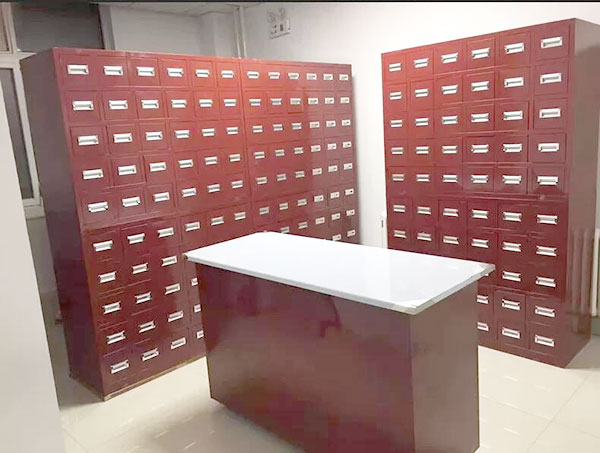
Modular steel cabinet systems — multiple units that connect side by side, with a shared dispensing table surface. These systems scale from 144 to 500+ herb compartments and work well in high-volume settings where multiple practitioners share the same storage.
Features That Matter for Health-Sensitive Clinics
FAQ
Do steel cabinets make herbs taste metallic?
No. Herbs are stored in sealed drawers with no direct contact between the herb and the steel surface. Most practitioners use food-grade paper liners or small plastic containers inside the drawers for added protection.
How do I know if my current cabinets have formaldehyde?
Buy a formaldehyde test kit from an online retailer and place it in the closed cabinet for 24 hours. If the reading exceeds 0.1 mg/m³, the cabinet is off-gassing. You can also hire an indoor air quality testing service for a more precise measurement.
Can I paint over my wooden cabinets to seal the formaldehyde?
Sealant paints can reduce emissions by 50–70 percent, but they do not eliminate them entirely. The sealant can chip over time, re-exposing the wood underneath. Replacing with steel is a permanent, one-time solution.
Are steel cabinets heavier than wood?
A 48-drawer steel cabinet weighs 60–90 kg depending on the steel grade. A comparable wooden cabinet weighs 40–60 kg. The difference is manageable, and steel cabinets on casters can be moved easily for cleaning or room rearrangement.
What is the lead time for ordering from China?
Standard models ship in 7–15 days. Custom sizes or colors take 15–25 days to manufacture. Sea freight to the US, Europe, or Australia adds 20–35 days depending on the destination port. Total door-to-door time is typically 5–8 weeks.
Will my patients notice the difference?
Most patients will not comment on the cabinet material directly. But many practitioners report that patients mention the clinic feels “cleaner” or “more professional” after switching to steel. The absence of the musty wood smell that accumulates in older TCM clinics is often the most noticeable change.