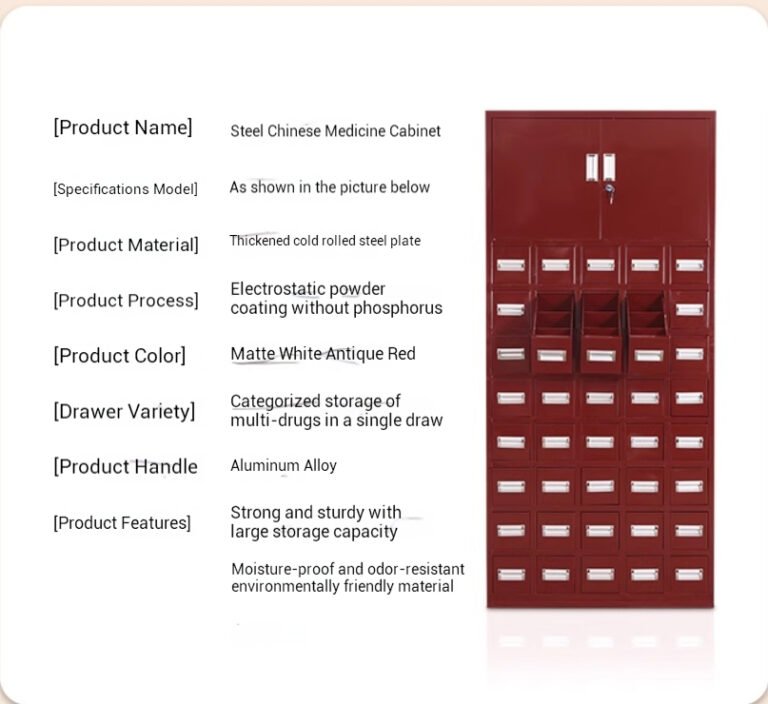
If you run a veterinary acupuncture practice, you already know the herb storage problem. Dog-safe Huang Qi sits next to cat-only formulas. Equine doses are three times human doses. One mislabeled drawer and a Great Dane gets a cat’s dosage of Ma Huang.
The cabinet you store those herbs in matters more than most vets realize.
Why Veterinary Herbal Storage Is Different from Human TCM Clinics

Human TCM clinics stock 200–400 herb types. A vet acupuncture practice might carry 150–300, but the storage challenge is harder:
Wood cabinets have been the default for decades. They look traditional. They feel right in a clinic setting. Many vet acupuncturists inherited their cabinet from a human TCM practitioner or bought one when they started their practice. But for veterinary use, wood creates problems that compound over time — and steel solves them outright.
Steel vs Wood: The Real Comparison for Animal Clinics
The math is straightforward. A mid-range steel cabinet lasting 18 years costs roughly the price of a cup of coffee per week. A wooden cabinet replaced every 6 years costs more over the same period — and you lose 2 weeks of use each time you swap.
What to Look for in a Veterinary TCM Cabinet
Not every steel cabinet works for a vet clinic. Here is what matters:
1. Drawer Size That Fits Animal Doses
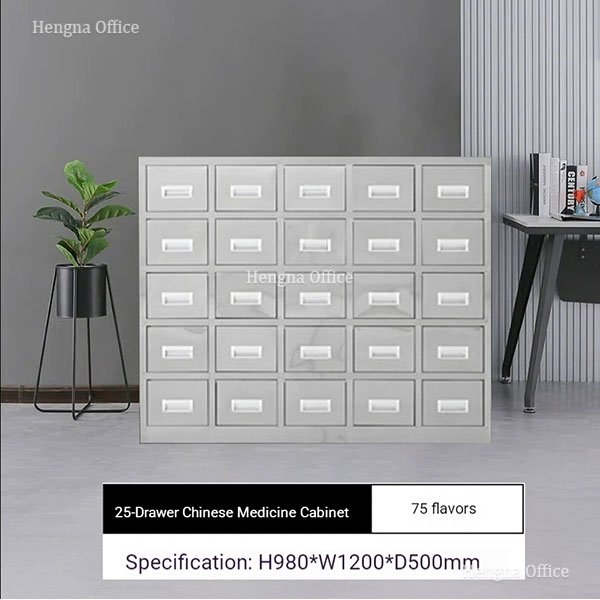
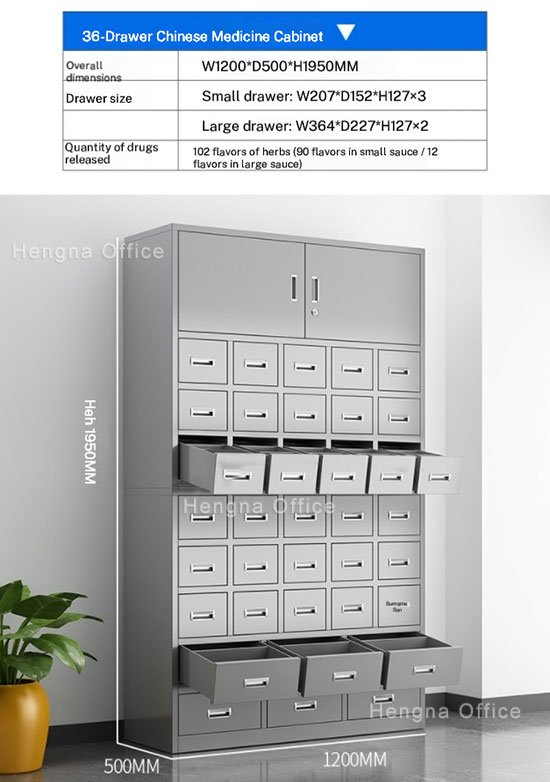
Standard human TCM drawers hold 50–80g of herbs. For equine and large-breed canine medicine, you need drawers that hold 200–500g. Look for:
2. Lockable Upper Storage
Controlled substances and toxic herbs (Wu Tou, Ma Huang, Ban Xia) need locked storage. A cabinet with a lockable top section keeps these separate from daily-use herbs.
3. Casters With Brakes
If you work across multiple locations or need to reposition the cabinet for cleaning, wheels are essential. Locking casters prevent movement during dispensing.
4. Corrosion-Resistant Finish
Animal clinics use harsh disinfectants (quaternary ammonium, bleach solutions). Powder-coated steel or 201 stainless steel handles these chemicals. Bare steel or painted finishes will chip and rust within a year.
5. Easy-to-Read Label Holders
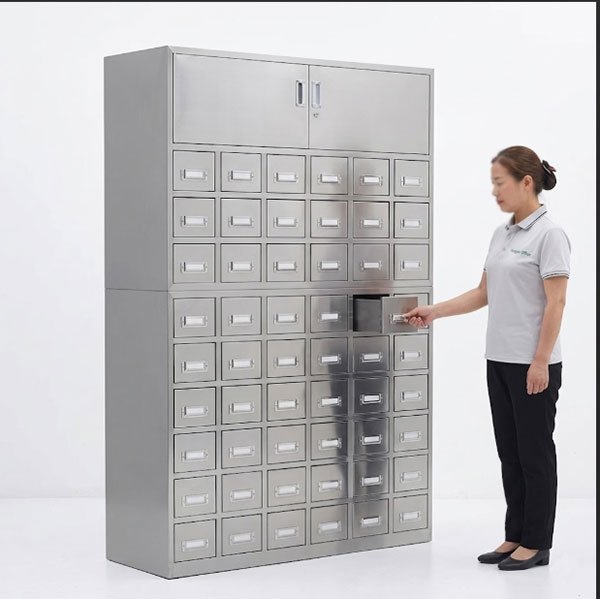
In a multi-species practice, you need clear labels on every drawer. Steel cabinets with built-in label slots (not adhesive labels that peel off) save time and prevent errors.
Real Setup: How One Australian Vet Clinic Solved Their Herb Storage
Dr. Sarah Chen runs a veterinary acupuncture practice in Melbourne with two associate vets. They treat 15–20 animals per day across dogs, cats, and horses.
Their old setup: two antique wooden cabinets from a human TCM clinic. Problems included:
Their new setup: two 48-drawer stainless steel dispensing tables on casters. The results after 12 months tell the story:
Stainless Steel vs Cold-Rolled Steel: Which Material Works Better?

For veterinary clinics, the choice comes down to your climate and cleaning routine:
201 Stainless Steel — Best for most vet clinics. Handles disinfectant sprays, humid climates, and daily wipe-downs. The most popular mid-range option for clinics switching from wood.
304 Stainless Steel — Choose this if you are in a coastal area (within 50km of the ocean) or use bleach-based cleaners daily. The higher nickel content resists pitting corrosion. Premium option for demanding environments.
Cold-Rolled Steel with Powder Coating — Budget option for dry-climate inland clinics. The powder coating resists scratches and herb tincture spills. Avoid if you are in a humid or tropical area — once the coating chips, rust follows.
How to Set Up a Veterinary Herb Cabinet: A Step-by-Step Guide
Once you have chosen your cabinet, the setup process matters as much as the cabinet itself. Here is how experienced vet acupuncturists organize their steel storage:
Step 1: Map Your Herb Inventory
List every herb you carry. Group them by species safety (dog-safe, cat-safe, horse-only, toxic/controlled). This determines your drawer allocation before you start filling drawers.
Step 2: Assign Drawer Zones
Divide the cabinet into physical zones. Top rows for daily-use herbs. Middle rows for species-specific herbs. Bottom rows for bulk storage. Lockable top section for controlled substances.
Step 3: Label Every Drawer
Use the built-in label slots on steel cabinets. Include: herb name (pinyin and English), species restrictions, and maximum dose. Replace adhesive labels — they peel off in humid environments.
Step 4: Add Drawer Liners
Food-grade paper liners or thin plastic trays inside each drawer make cleaning faster and prevent herb residue from sticking to the steel surface.
Step 5: Set a Cleaning Schedule
Wipe drawers with a dry cloth between patients. Disfect with a mild solution weekly. Deep-clean empty drawers monthly.
How Many Drawers Does a Veterinary Acupuncturist Need?
This depends on your herb inventory and patient volume:
A common mistake is buying too small. You will add herbs as your practice grows. A 48-drawer cabinet for a solo practice gives you room to expand without replacing the unit.
FAQ
Can I use a human TCM cabinet for my veterinary practice?
Yes, but you will likely need to modify your labeling and species-separation protocols. Human TCM cabinets have standard-size drawers that work for human doses, but veterinary doses for large animals may not fit. Veterinary-specific cabinets have larger drawers and better lock systems designed for animal medicine dosing.
How do I prevent cross-contamination between species-specific herbs?
Use sealed individual drawers — not open shelves. Assign specific drawer rows to specific species (top row for dogs, middle for cats, bottom for horses, for example). Clean drawers with a dry cloth between patients and disinfect weekly. Some practitioners use color-coded labels: red for cat-only, blue for dog-safe, green for equine.
Do steel cabinets affect herb quality?
No. Steel does not off-gas or absorb moisture like wood. Herbs stored in steel drawers retain their potency longer, especially in humid climates. If you are concerned about direct contact, use food-grade paper liners inside the drawers.
What certifications should I look for?
For US imports, no specific certification is required for steel herb cabinets. For EU markets, CE marking may apply if the cabinet includes electrical components such as LED lighting. For Saudi Arabia, SASO certification is required. For Australia, no specific import certification applies to steel furniture, but your veterinary board may have storage guidelines.
Can I get a custom-sized cabinet for my treatment room?
Most Chinese manufacturers offer OEM/ODM services. Standard lead time for custom dimensions is 15–25 days. Minimum order quantity for custom sizes is typically 1–5 units. Common custom requests include extra-wide drawers for equine doses, additional lockable sections, and custom color matching for clinic branding.
How do steel cabinets handle the strong smell of certain herbs?
Steel does not absorb odors the way wood does. If you store pungent herbs like She Xiang (musk) or A Wei (asafoetida), the smell stays inside the sealed drawer rather than permeating the cabinet body. A quick wipe with a vinegar solution removes any residue on the steel surface.