A TCM pharmacy within three kilometers of the coast is a different animal from one inland. Here is the math.
Take a painted cold-rolled steel herbal cabinet. Drop it into a dispensary that close to the sea. Within a single quarter, the drawer seams start showing rust spots. Once the coating blisters, salt-laced humidity seeps in behind it. Herbal granules soak up moisture. The smell shifts. You notice. Your patients notice. The inspector notices. At that point the pharmacy director is not dealing with a cosmetic problem — it is a compliance headache. The herbal storage log stops making sense. The quality score slides. The real hit is herb inventory loss and the cost of corrective action, which adds up faster than the cabinet ever did.
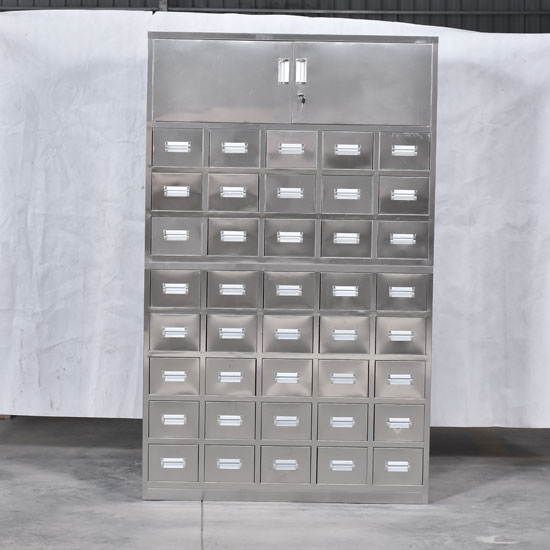
That is why Hengna builds this 48-drawer TCM cabinet for coastal and island pharmacies starting from the raw material, not from the paint.

The body is 304 stainless steel, marine-grade — the same alloy family as dock bollards and boat railings. The difference between 304 and 201 is not something you see. It is in the chromium and nickel content. 304 carries chromium above 18%, enough to rebuild its own passive oxide layer after a saltwater splash. That is the whole point of stainless. 201 has chromium but the nickel is short, so once the passive film cracks in chloride, it does not come back. In a seaside dispensary with the windows open for ventilation, one self-heals and the other slowly yellows. That is the line.
The welds, drawer fronts, and cabinet base are all cut from 304 plate — not a 304 skin over mild steel. The spot coastal pharmacies lose cabinets first is always the seam where two panels meet. Brine sits in the gap and the clock starts. Hengna runs a continuous weld and grinds it flush. No seam, no gap, nowhere for salt to hide.
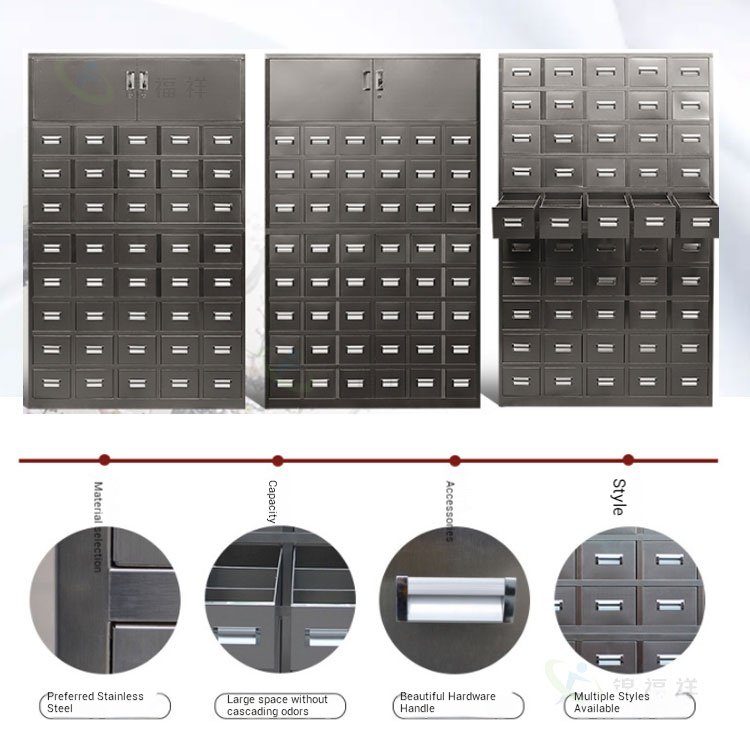
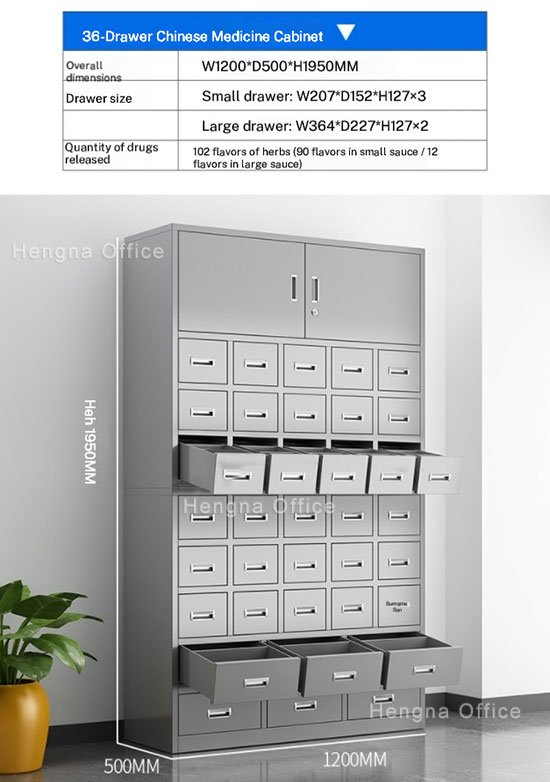
Each drawer is divided into three compartments — one herb per cell — with a label holder on the front. A pharmacist spotting a herb name during a rush does not need to pull the drawer all the way out to confirm.
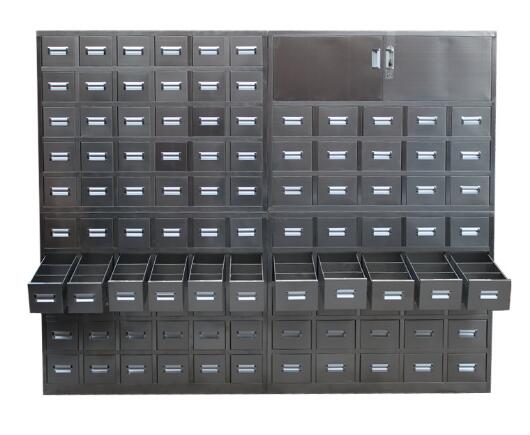
The dividers inside every drawer are welded to the side walls as a single piece. They do not slide out. That matters when a technician grabs a full drawer with one hand and expects it to hold together. The drawers do not use ball-bearing slides. They use a hooked stop — no bearing to seize, no rail to corrode, and pulling too far will not dump the drawer on the floor. On a counter that opens and closes hundreds of times a day, that is the difference between a cabinet that works in year five and one that drags by month six.
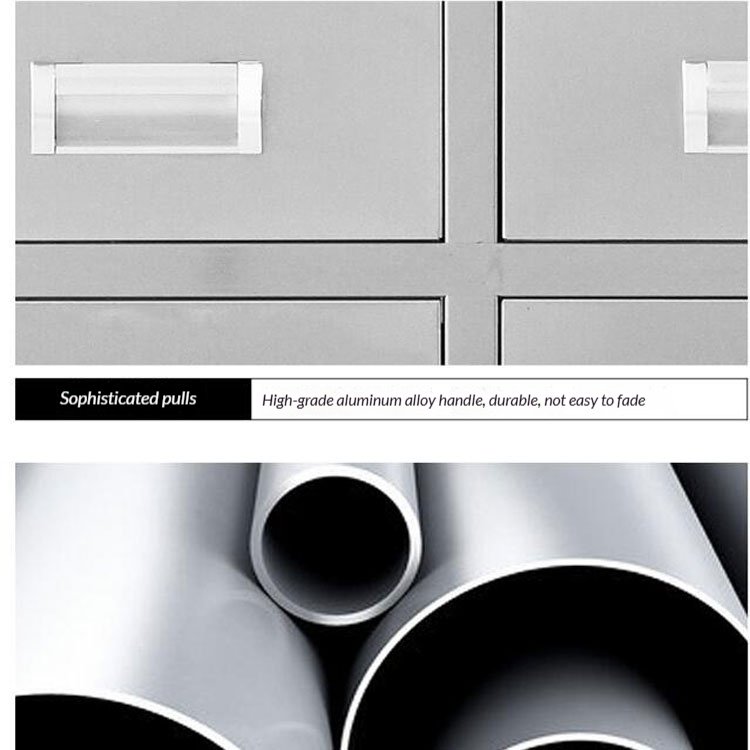
The pulls are brushed aluminum — light, no paint to chip, cool to the touch in a humid room. The locks are steel-core with a low cross-key rate; a pharmacy running several cabinets will not find one key opening all of them. That is a small detail until controlled herbs sit on open shelves and shift-change arguments start over who accessed what.
Marine-Grade 48-Drawer TCM Dispensing Cabinet Specifications
| Item | Detail |
|---|---|
| Drawers | 48 |
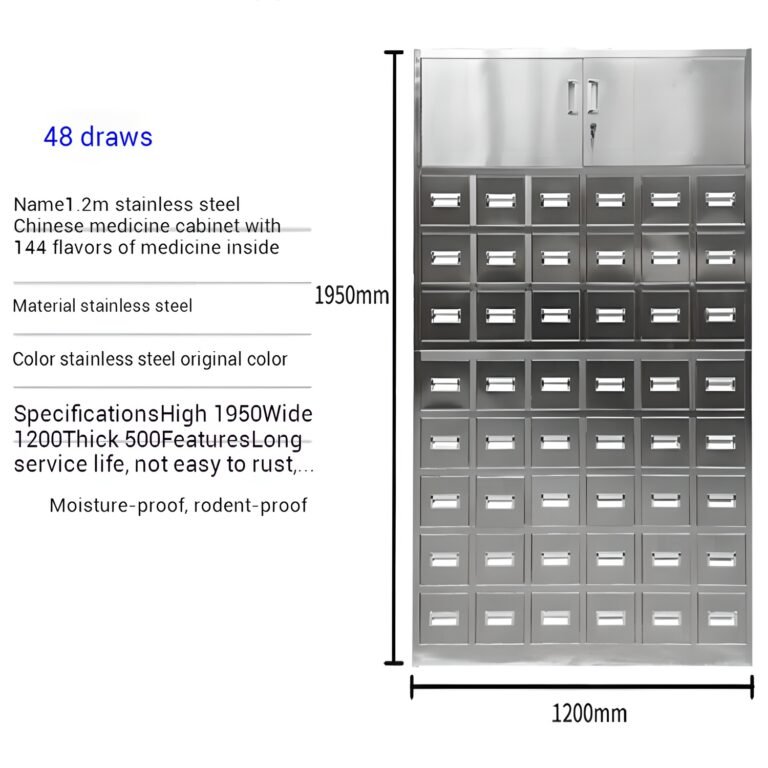
| Capacity | 144 herb varieties (3 cells × 48 drawers) |
| Dimensions | 1200 mm W × 500 mm D × 1950 mm H |
| Material | 304 stainless steel, marine-grade, brushed finish |
| Drawer construction | 3 cells, welded dividers, hook-stop, label holder |
| Base | Raised feet, bottom edge off the floor |
| Locks | Steel core, low cross-key rate |
| Pulls | Brushed aluminum |
| Certification | CE marked for EU and aligned markets |
| Shipping | Fully assembled, unpack and use |
| Supplier | Hengna Office Furniture |
In the real world, this cabinet fits a coastal municipal TCM hospital, a one-room dispensary on an island, or an overseas Chinese medicine clinic in a humid port city. Across Southeast Asia and the Gulf, 304 is already the default material for medical furniture. The cabinet ships fully assembled with desiccant packed inside the wrap to handle condensation during ocean transit. A pharmacy director in Penang told us their previous painted cabinet needed repaint every year. The 304 unit has now run two full monsoon seasons without a single spot.
Someone always asks: will 201 do the job? It costs less. But the nickel is short, the passive layer cannot keep up with chloride attack, and within months near the sea the surface goes yellow and looks five years old. Painted cold-rolled steel lives and dies by the coating. Chip a grain-of-rice-sized piece off a drawer corner and rust creeps under the paint where you cannot see it until it blisters. If you plan to keep that dispensary running for ten years in a coastal town, does the 304 premium pay for itself? Do the math on a year of herb loss and repaint labor. You do not need me to answer that.
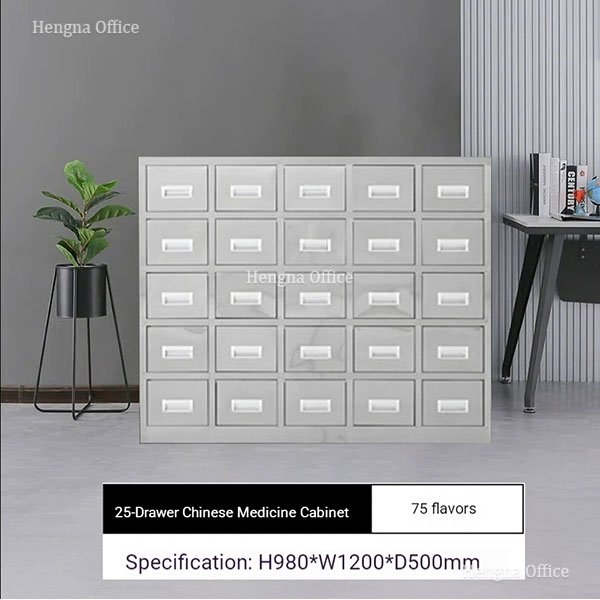
Is 144 varieties enough? A mid-size pharmacy running common formulas will be fine. A county TCM hospital stocking 200-plus items can step up to the 60-drawer (180 varieties) or 70-drawer (210) in the same 304 line. Match the drawer count to your formulary, not to the room dimensions. The 1200 mm width sits against the wall without blocking the dispensing counter workflow.
Maintenance is two things. Wipe the exterior with a damp cloth once a week. If your windows face the sea, rinse the outer panels with fresh water once a month — wash the salt off before it bites. No oiling, no repainting, no slide rails to service. The hooked stops and welded dividers have no parts that wear. Your maintenance log reads the same in year three as in year one.
Questions that come up
Q: Will 304 actually not rust by the sea?
A: No stainless is rust-proof under constant direct salt spray, and anyone who claims otherwise is selling something. But marine-grade 304 with continuous welds and no paint to fail is the practical choice for a coastal dispensary. If your spot faces the water directly, rinse the exterior panels with fresh water regularly.
Q: Can I change the drawer count or size?
A: The 48-drawer 1200 mm body is the standard. The same 304 line runs from 21 to 70 drawers in different widths. Non-standard dimensions and drawer configurations go through Hengna; lead time and minimum order depend on the spec.
Q: How does it ship overseas?
A: Fully assembled. Desiccant is packed inside the wrap to handle condensation during ocean transit. Unpack and use — no on-site assembly required.
Q: What about the cabinet sitting on a damp floor?
A: The raised feet lift the bottom edge off the ground — aimed straight at ground-floor pharmacies in coastal towns, where floor moisture is the most common rust trigger.
Planning a coastal or island dispensary fit-out? Send your room dimensions and herb count. We configure the drawer layout and shipping. Contact Hengna.