If you run a TCM clinic in Southeast Asia, you’ll eventually run into this: termites eating your wooden cabinet.
Not “if” — “when.” Tropical climate means termites are active year-round. A wooden medicine cabinet packed with herbs? That’s an all-you-can-eat buffet. By the time you notice, it’s usually too late — drawers stick, corners crumble, the wood looks fine on the outside but is hollow inside. And the herbs? Contaminated.
Replace it with another wooden cabinet, and five years later you’re doing the same thing again. It’s not bad craftsmanship. It’s wood in a tropical climate — it doesn’t last.
So what’s the alternative?
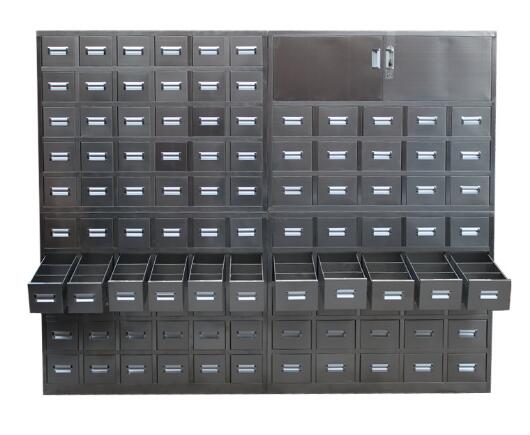
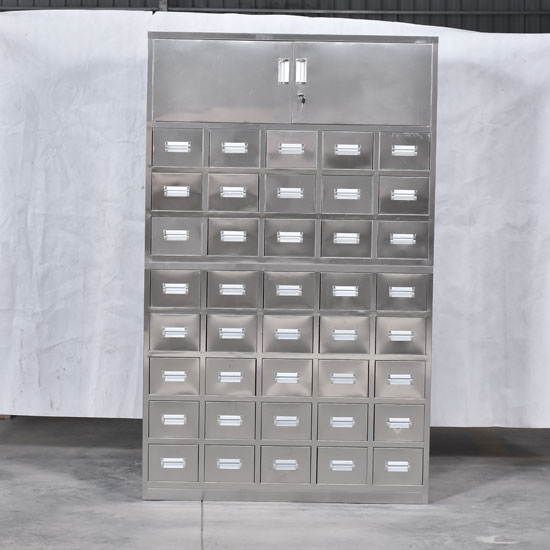
Steel cabinets. Cold-rolled steel or stainless steel. Termites can’t eat steel.
Simple reason: termites eat cellulose. Wood has it. Steel doesn’t. A steel cabinet sits in the same room, termites walk right past it. Steel also doesn’t absorb moisture, doesn’t rot, and doesn’t grow mold — all three of which are bigger problems than termites in a tropical climate anyway. A steel cabinet in Bangkok or Jakarta will look the same ten years in. A wooden one will be on its second replacement.
Which steel to pick?
Two options, depending on your budget and conditions.
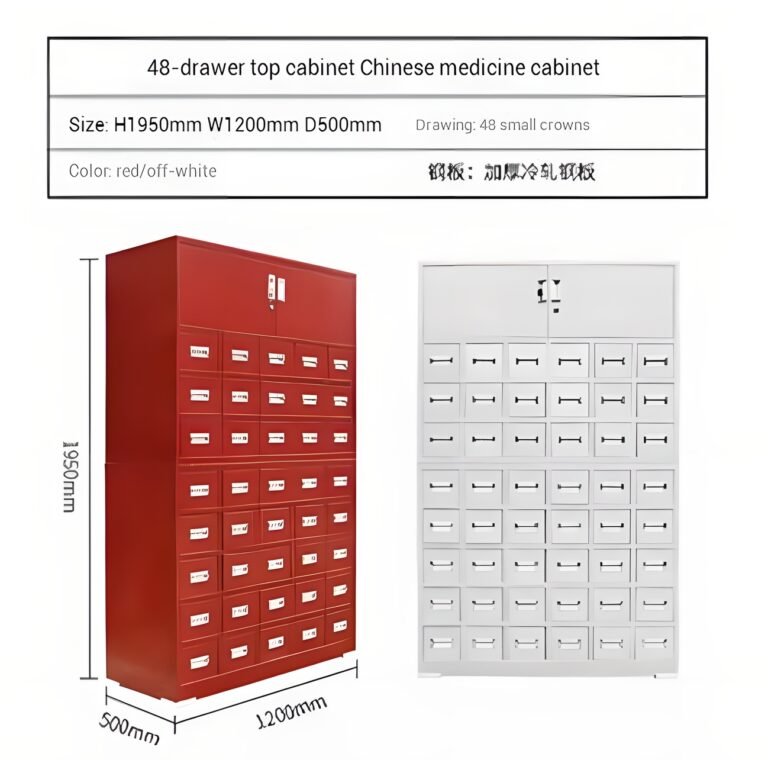
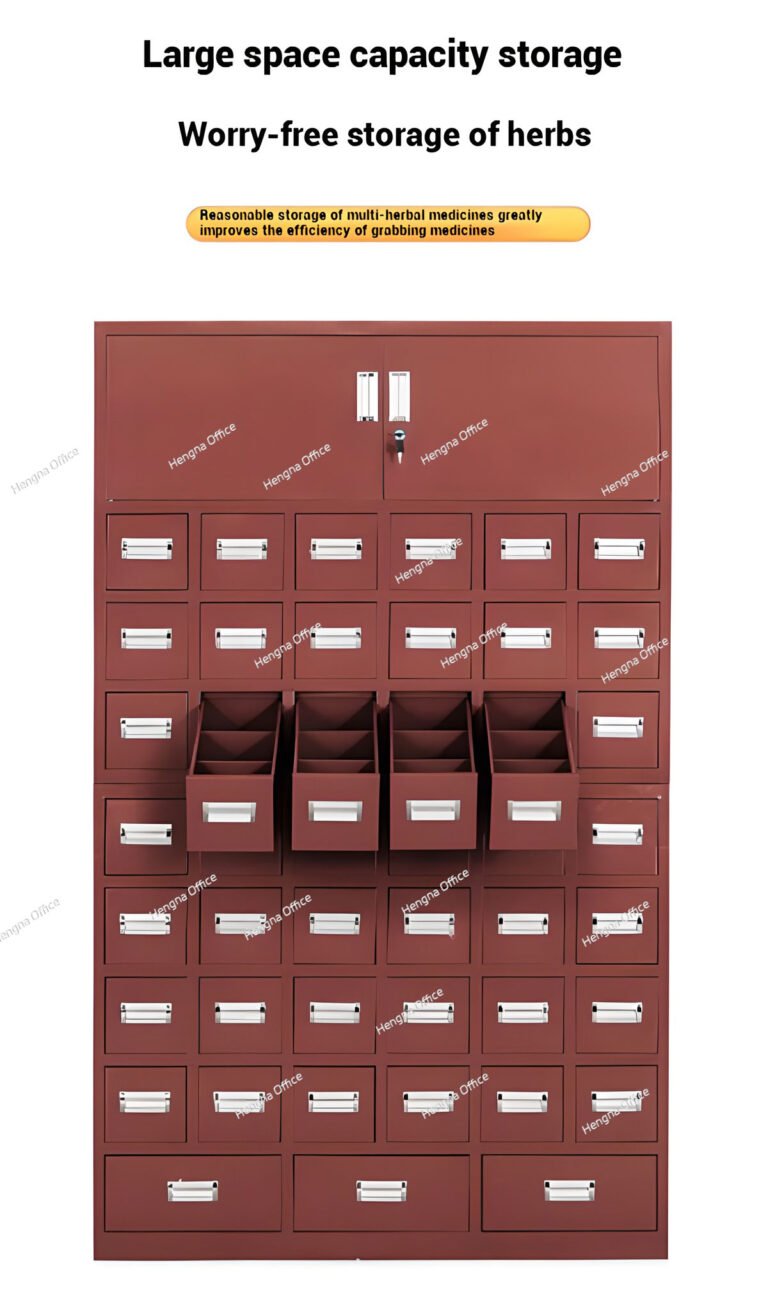
Cold-rolled steel with electrostatic powder coating — grey-white or wine red. Affordable, the coating seals the surface well, good enough for daily moisture protection. If your clinic is inland with moderate humidity, this is plenty.
201 stainless steel — costs more than cold-rolled steel but steps up corrosion resistance. Good for higher humidity environments or if you’re used to washing down surfaces daily. Commercial kitchens and hospital carts use this grade.
304 stainless steel — if you’re in a coastal city (Ho Chi Minh, Bangkok, Singapore — anywhere with salt in the air), go straight to 304. 201 won’t hold up long in salt spray. We custom-build 304 units. One unit minimum, sample fee applies.
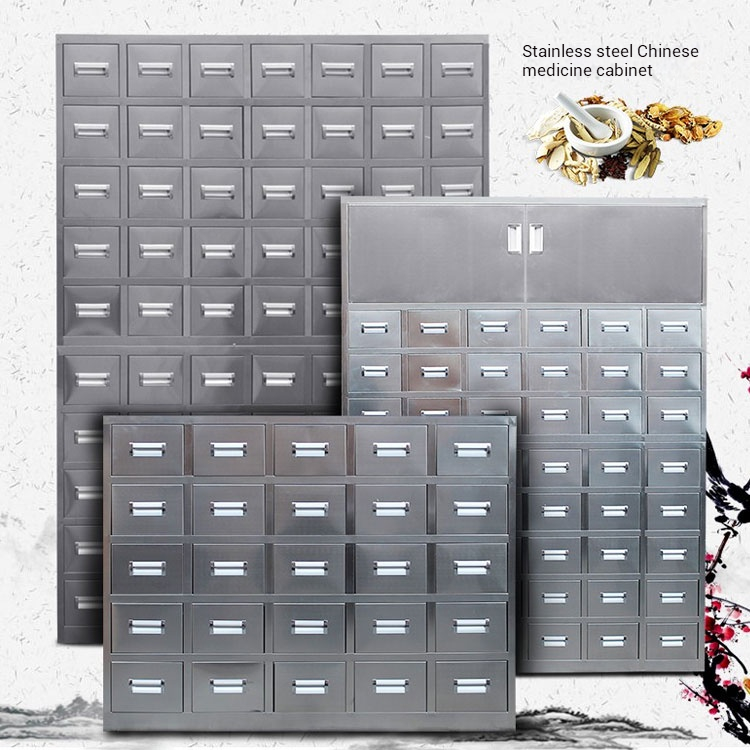
What size do you need?
Steel TCM cabinets typically come in three widths:
1.2m wide — the most popular. 1950H × 1200W × 500D mm. 48 drawers, 144 compartments, or 50 drawers, 150 compartments. Fits most clinics.
1.4m wide — high-capacity. 1950H × 1400W × 500D mm. Goes up to 70 drawers, 210 compartments. For clinics with a large herb catalog.
0.9m wide — compact. 1800H × 900W × 500D mm. When floor space is tight.
There’s also a matching dispensing table: 16 drawers, 48 compartments, stainless steel. Without casters: 900H × 1400W × 600D mm. With casters: 1000H × 1400W × 600D mm. Order them together and save on freight.
Steel vs wood — the real differences:
| Factor | Wood Cabinet | Steel Cabinet |
|---|---|---|
| Termite resistance | Naturally attracts termites | Completely immune |
| Moisture resistance | Absorbs, swells, warps | Zero absorption, no warp |
| Formaldehyde | Present in board adhesives | Zero, no off-gassing |
| Drawer smoothness | Wood friction increases over time | Steel slides, smooth for years |
| Divider stability | Wood dividers loosen and fall | Steel dividers welded in place |
| Lifespan in tropics | 3-8 years | 10-20 years |
| Long-term cost | Replace every 3-8 years | One purchase lasts 20 years |
| Maintenance | Needs periodic sealing and paint | Wipe clean |
Termite-Proof Chinese Medicine Cabinet Straight talk on ordering:
MOQ: 1 unit. Want to try one steel cabinet before committing to more? That works.
Quote: within 24 hours.
Warranty: 1 year standard. Structural issues get replaced or repaired.
Lead time: 15-25 days depending on current orders.
OEM: silk-screen your logo, custom packaging, custom manuals — all available.
CE certified: yes. If your market needs it, we have it.

Packaging — worth mentioning:
For shipments to Southeast Asia or the Middle East — long sea routes, big temperature swings. We ship fully assembled: wooden crate, moisture film on hardware, corner protectors on all edges. Open it and use it. No assembly. If you’ve dealt with iron or wooden cabinets before, you’ll feel the difference the moment you slide a drawer open — smooth, solid, no paint smell.

Who reads this article:
Four types of buyers keep showing up. TCM clinic owners in Southeast Asia whose wooden cabinets have already been hit by termites and are looking for a permanent fix. Overseas Chinese medicine practitioners sourcing cabinets and dispensing tables from China. Wellness spas in tropical countries that need moisture-proof, pest-proof herb storage and display. Hospital pharmacy procurement managers replacing equipment in bulk.
What they all want: something that doesn’t need fixing every few years.
Termites can’t eat it. Moisture can’t warp it. No formaldehyde. And when you do the math — one steel cabinet for twenty years vs. replacing a wooden one every five years — steel ends up costing less, even before counting the herbs you lose to pests.
Not sure which material fits your climate, or which size your room needs? Send a message. Same-day reply with a quote and material sheet. We have active clients in Thailand, Vietnam, and Malaysia — can share local references if helpful.