Herbal preparation needs two things at the same moment: a clean surface to weigh and pack on, and every ingredient within arm’s reach. Most clinics buy a table and a cabinet as separate pieces, then discover the two never quite fit the workflow. The 16-drawer steel herb table solves that by combining both — a full-size stainless worktop with 16 deep storage drawers underneath, in one unit.
This is a dual-use workstation: prepare herbs on top, store them below, and never walk more than one step between drawer and scale.
Key Features
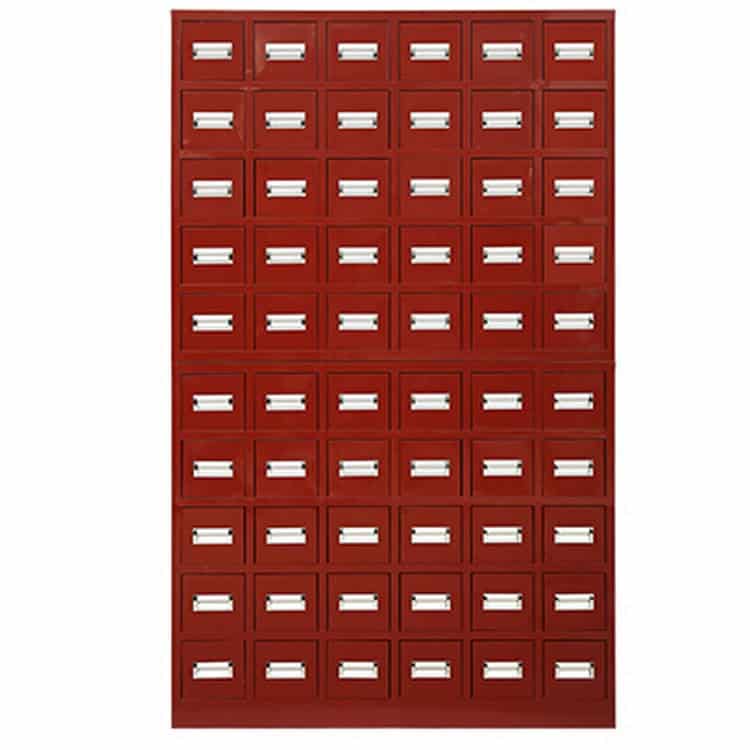
- 16 deep storage drawers. Each drawer is sized for real dispensing — holding dried roots, barks, powders, or granules in volume. Use one herb per drawer, or split drawers with dividers for related items.
- Steel construction throughout. The cold-rolled steel frame and body are built for high-traffic professional settings. No MDF, no particleboard, no glue joints that loosen under load — which also means no formaldehyde off-gassing in your treatment room.
- Hygienic stainless steel top. The 201 stainless steel work surface is smooth and non-porous. Herb dust wipes off with a dry cloth; tincture spills do not stain; a full disinfectant clean takes under a minute.
- Built-in labeling slots. Every drawer face has a slot for card labels, so herbs are found by position and by name — no sticker residue, no peeling labels.
- Working height, not cabinet height. At 90 cm tall, the surface is at comfortable standing work height. You weigh, pack, and hand over without bending to a low counter.

Specifications
| Item | Detail |
|---|---|
| Material | Cold-rolled steel body + 201 stainless steel worktop |
| Dimensions | 140 cm (L) × 90 cm (H) × 60 cm (D) |
| Drawer count | 16 drawers |
| Color | Burgundy red standard, custom colors available |
| Applications | TCM clinics, herbal pharmacies, wellness centers, apothecaries, teaching programs |
The Dual-Use Advantage: Prep Surface + Storage in One
A separate cabinet plus a separate work table eats floor space and adds walking time. Watch a dispenser during a busy hour and count the trips between storage and the scale. With a combined unit, the motion collapses into one turn:
- Read the prescription.
- Pull the first drawer — right under the working surface.
- Weigh on the stainless top.
- Slide the drawer shut, pull the next.
- Pack and label on the same surface.
For a clinic filling 30 to 60 prescriptions a day, that saving adds up to real minutes per patient. For a small room, it can also mean fitting an entire dispensing operation into a corner that would never hold both pieces of furniture.
Who Is This Table For?
- Herbal medicine clinics. Streamline prescription preparation and keep ingredient freshness under your hands instead of across the room.
- Apothecaries and dispensaries. Organize herbs for easy, repeatable dispensing — the same layout every day, for every staff member.
- Wellness centers. Support tea blending, compress preparation, and herbal bath services with a dedicated, easy-to-sanitize surface.
- Herbal training programs. Classroom-sized storage where students learn identification and weighing at a real work height.
16 Drawers vs 36 or 48: Which Fits Your Practice?
| Configuration | Best For | Typical Herb Range |
|---|---|---|
| 16-drawer table | Solo practitioners, small rooms, retail counters | Up to ~100 herbs |
| 36-drawer cabinet | Two-practitioner clinics | 100–180 herbs |
| 48+ drawer cabinet | High-volume dispensaries, multi-practitioner clinics | 180–300 herbs |
The 16-drawer table suits practices that keep a focused herb list — an acupuncturist prescribing 40 to 80 staples, or a pharmacy that stores bulk stock elsewhere and keeps daily-use herbs at the counter. If your list exceeds 100 herbs, pair this table with a taller cabinet for overflow.
Daily Use and Care
Keeping the unit clean is part of keeping prescriptions clean:
- Wipe the stainless top with a dry or slightly damp cloth after each prescription batch.
- Sanitize the surface daily with a mild disinfectant — stainless tolerates it without staining.
- Line powder drawers with food-grade paper for fast refills and simple changes of herb.
- Check drawer slides twice a year; ball-bearing slides rarely need more than a light clean of dust.
- Replace drawer labels whenever an herb changes position — which is why built-in slots matter.
Setting Up the Table on Day One
A good first-day setup saves months of small adjustments:
- Position for the turn. Place the table so the dispenser can open drawers with the left hand while reaching the scale on the surface with the right — then mirror it for left-handed staff.
- Load by frequency. The 12 busiest herbs go in the front row. Everything the team touches hourly belongs within one arm’s reach; everything else fills the outer rows.
- Fix the labels before the first prescription. Write and slot every label before stock goes in, not after. Retro-labeling is where layouts drift.
- Lock the casters. If your unit has wheels, brake them once the position is final. A table that moves mid-weigh is a spill waiting to happen.
- Keep a scale and packing paper on the surface. The whole point of the dual-use design is that weighing and packing happen in the same spot — so give both a permanent home.
Common Buying Mistakes to Avoid
- Buying drawer count for today’s herb list. Herb lists grow. A 16-drawer table for a list of 80 herbs leaves no room; the same table for 50 leaves headroom.
- Ignoring drawer depth. Shallow drawers limit you to leaves and flowers. Check inside depth against your bulkiest stock.
- Choosing paint over powder coating. Painted surfaces chip where drawer faces get touched all day. Powder coating does not.
- Forgetting delivery access. Measure doorways and corridors. A fully assembled unit that cannot reach the treatment room is an expensive lesson.
FAQ
Can the table top support a decoction pot or electric dispenser?
The steel structure carries normal working loads easily. For heavy fixed equipment, tell your supplier the intended use before ordering so the frame can be reinforced where needed.
Is the table available on casters?
Yes, caster versions are available for clinics that reposition the unit for cleaning or move between treatment rooms. Casters include brakes to keep the table stable during dispensing.
Can I get a different color or custom dimensions?
Yes. The standard finish is burgundy red, and custom colors are available for OEM orders. Custom dimensions follow standard manufacturing lead times.
Does this table work for a pharmacy that mainly sells packaged herbs?
It works well as a counter unit for retail: packaged items on top, loose daily-use herbs in the drawers, scale at the edge. Many retail pharmacies run exactly this setup.
How does it hold up in humid climates?
The cold-rolled steel body carries a powder-coated finish that resists daily humidity and cleaning. In coastal areas or clinics that run air conditioning constantly, the 201 stainless top already covers the most exposed surface, and a full stainless model is available for higher-risk environments.
Can drawers be divided for smaller herbs?
Yes. Adjustable dividers split each drawer into two or three compartments, so 16 physical drawers can hold more than 40 distinct items — useful for flowers, seeds, and powders that come in small quantities.
Why This Table?
Purpose-built furniture changes daily work more than most buyers expect. The steel structure stays stable for years; the stainless top stays hygienic with a wipe; the 16-drawer layout keeps a working herb list exactly where it belongs — under the surface you work on. If you are setting up a dispensary corner or replacing a worn unit, this is the piece that makes the workflow click.
Browse the full range of steel herbal dispensing counters, or read how steel compares to wooden cabinets before you decide.
