Home herbalism has grown from a niche hobby into a mainstream practice. People dry their own mint and chrysanthemum, stock goji berries and dried ginger for daily teas, and keep a small working pharmacy of 30 to 80 herbs at home. What most of them lack is a storage solution designed for herbs — kitchen cabinets were built for cereal boxes, not for materials that fade in light, drink humidity, and swap aromas through a thin shelf door.
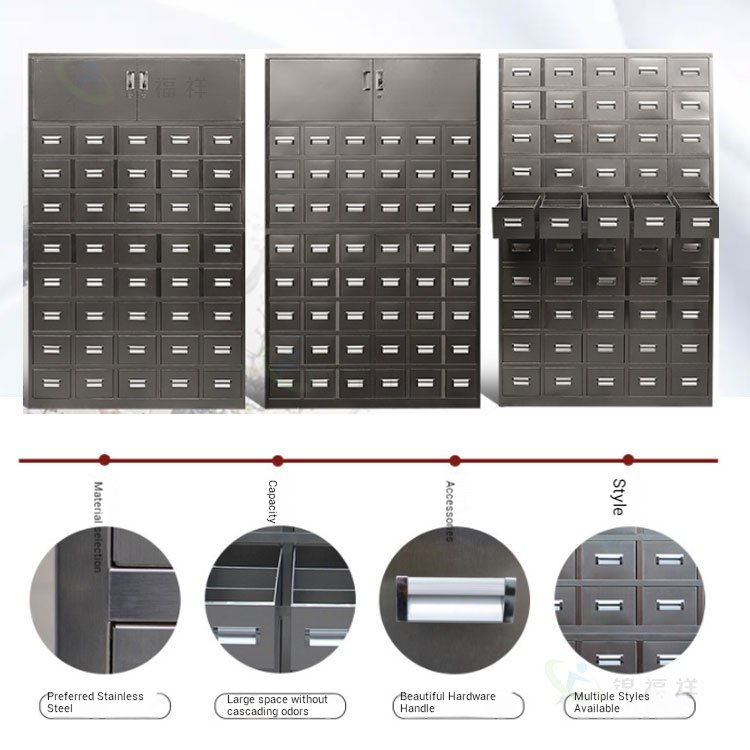
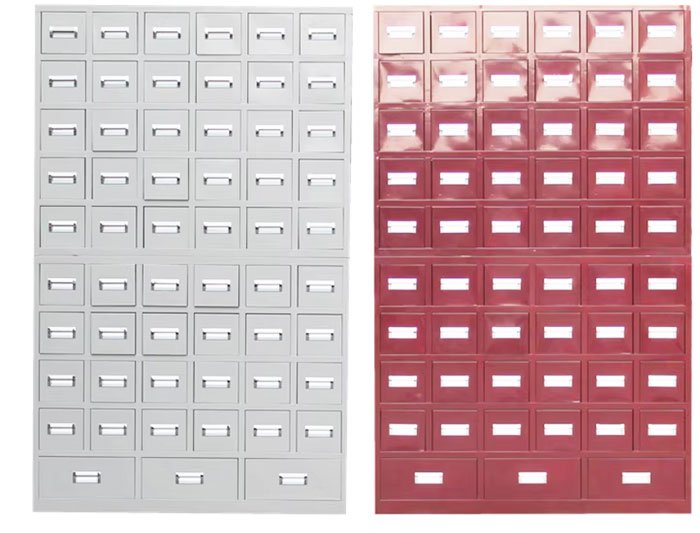
Hengna’s space-saving steel herbal cabinets bring professional herb storage into homes, in two finishes — grey white and burgundy — sized for real rooms and real apartments. This guide covers why dedicated storage matters, how the compact designs fit small spaces, and how to choose a size for your own herb collection.
Why Home Herbalists Need Purpose-Built Storage
Dried herbs face the same four enemies at home as they do in a clinic: light, moisture, dust, and cross-contamination of aroma. Household storage fails on all four:
- Kitchen cabinets sit near the stove and sink — heat and steam that shorten shelf life
- Open shelves look lovely and fade herbs within months; light destroys volatile oils
- Glass jars on windowsills are the fastest way to bleach an herb pale and flavorless
- Plastic boxes hold odors and, over years, can pass them back into the next batch
A sealed steel drawer answers all four: dark inside, dry, dust-free, and odor-tight. Herbs stored this way keep their scent and strength for a full season and beyond — which matters when you dried that mint yourself and cannot simply reorder it.
Grey White & Burgundy: Two Finishes That Fit Real Homes
Herb storage used to mean a red lacquered antique that dominated a room, or an industrial cabinet that looked borrowed from a workshop. The current designs split the difference:
- Grey white suits modern apartments and bright rooms. It reads as clean furniture, not medical equipment — guests will ask about it, not avoid it.
- Burgundy carries the traditional apothecary character. In a study, tea room, or practice space, it adds warmth and signals that the herbs inside are taken seriously.
Both finishes are powder-coated — baked hard, solvent-free, and safe around stored herbs — and both wipe clean with a damp cloth.
Space-Saving by Design
The compact cabinets keep the working parts of a pharmacy cabinet and lose the bulk:
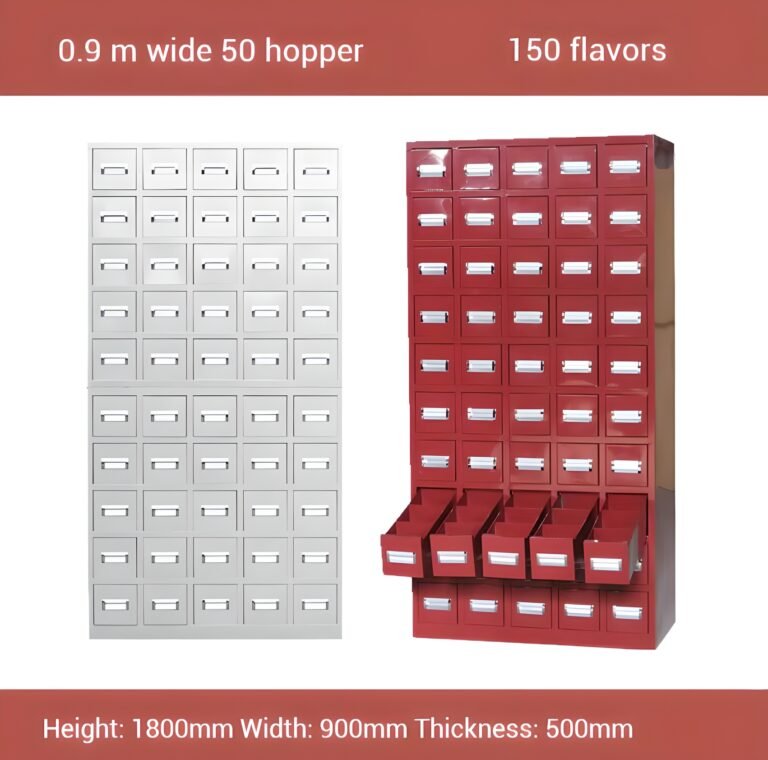
- Narrow footprints. Units start around 0.9 m wide and sit flush against a wall — the footprint of a small bookcase.
- Vertical storage. Tall models stack 30 to 60 drawers upward, so a 100-herb collection lives in under half a square meter of floor.
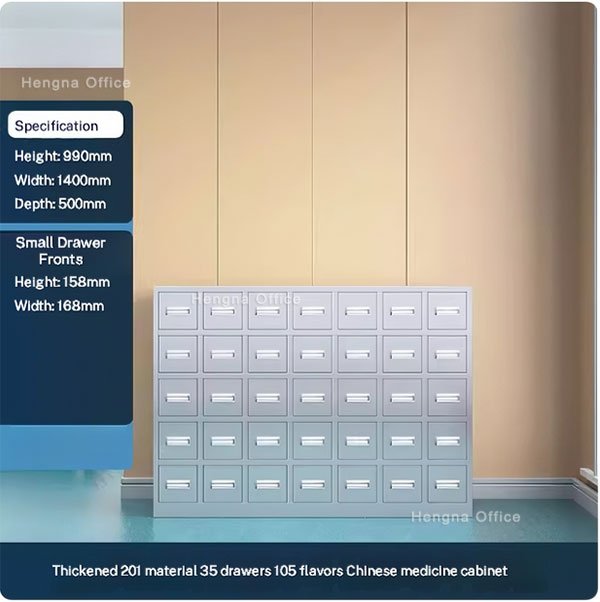
- Counter-height options. Shorter units top out at working height and double as a blending surface — weigh your tea blend on top, store the ingredients below.
- Stackable rows. As the collection grows, matching units add on without mismatched furniture piling up.

Sizing Guide for Home Herbalists
| Your Herb Collection | Recommended Storage | Floor Space Needed |
|---|---|---|
| 20–40 herbs (tea-focused) | 16–24 drawer unit | About 0.5 m of wall |
| 40–80 herbs (regular practice) | 24–36 drawer cabinet | 0.9 m wide unit |
| 80–150 herbs (serious home pharmacy) | 36–60 drawers, one or two units | 0.9–1.2 m of wall |
| 150+ herbs (home practitioner) | 60+ drawers in stacked rows | A dedicated wall section |
Drawers hold more than beginners expect: a standard 120 mm-deep drawer carries a full batch of roots, barks, or several hundred grams of cut flowers and leaves.
What Goes in Which Drawer: A Home Layout That Works
Organization is where home storage usually falls apart — herbs accumulate faster than systems. A layout that works for most home herbalists:
- Top rows: the 8 to 12 herbs you actually use weekly — your teas, your cooking staples. Arm’s reach, no bending.
- Middle rows: the working collection, grouped the way you think: by function (digestive, calming, respiratory) or by family. Label in whichever language you prescribe to yourself.
- Bottom rows: bulk stock, seasonal surplus, and drying batches waiting to be weighed and jarred.
- Lockable top section: anything strong, restricted, or child-reaching — or simply the herbs you do not want houseguests borrowing.
One habit ties it together: whenever a drawer runs low during use, note it the same day. Home stock has no supplier to reorder from at midnight — rotation notes are what keep the tea drawer from going empty mid-winter.
Where to Place Your Cabinet
- Study or home office — the most common spot: dry, stable temperature, close to where recipes are kept
- Dining room corner — burgundy finishes pair naturally with tea culture; the cabinet becomes part of the ritual
- Practice or treatment room — for home practitioners, a labeled cabinet wall is both storage and credibility
- Entry hallway — grey white units work as functional furniture, with the daily-use teas in the top rows
Wherever it goes, keep it out of direct sun and away from the stove or bathroom steam. Steel protects herbs from the environment — it cannot protect them from being parked next to a kettle.
Steel vs Wooden Storage Boxes at Home
| Factor | Steel Cabinet | Wooden Boxes |
|---|---|---|
| Aroma mixing | Sealed drawers keep scents apart | Shared shelf air blends everything |
| Pest risk | None | Occasional moths and beetles |
| Cleaning | Wipe and done | Cracks and joints hold dust |
| Look over time | Finish holds for years | Fades, dents, and swells with seasons |

Care and Cleaning
Home upkeep is simple:
- Wipe drawer faces monthly with a dry or slightly damp cloth.
- Line drawers that hold powders with food-grade paper.
- Rotate stock — older herbs to the front, new batches behind.
- Once a season, open every drawer and check for moisture or aroma drift; adjust lids or liners where needed.
That is the entire maintenance routine. No oiling, no refinishing, no pest traps.
FAQ
Will a steel cabinet make my herbs taste metallic?
No. Herbs never touch bare steel in any meaningful way — most people use paper liners or small trays — and steel does not give off odor or flavor. Wooden boxes do.
How many drawers does a beginner actually need?
Most home herbalists starting with teas and common kitchen herbs do well with 16 to 24 drawers. If you dry your own herbs or keep a wider range, 36 is the comfortable number.
Can the cabinet go in a humid kitchen?
Powder-coated steel handles normal indoor humidity well. For a kitchen placement, keep it away from the sink and stove; a small dehumidifier in the room helps any storage, steel or not.
Is assembly difficult?
Compact units arrive assembled or near-assembled. Confirm with the supplier before ordering, and measure your doorway if you live in an older building.
Do the cabinets lock?
Many models include a lockable top section — useful for households with children, or for keeping stronger herbs away from casual hands.
Can I add a second cabinet later?
Yes — that is what the stackable design anticipates. Order the same model and finish, and the rows align. Starting with one 36-drawer unit and adding a second when the collection grows is the most common path for serious home herbalists.
Storage Worthy of the Herbs
Home herbalism is a practice of patience — growing, drying, and keeping herbs that cannot be bought fresh. Storing them in kitchen cabinets undoes that patience one humid summer at a time. A compact steel cabinet gives a home collection the same protection a professional dispensary relies on, in a footprint and finish that fits a real apartment.
Explore the steel herbal storage cabinet range to compare sizes, or read our guide to choosing the right drawer size before you order.