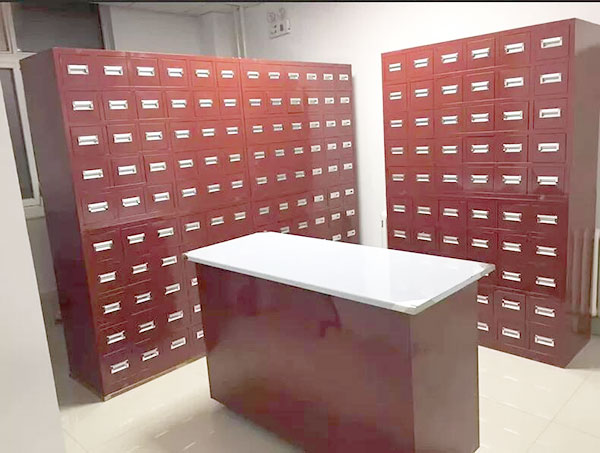
Ask an herbal supplier which cabinets clinics reorder most, and the answer has changed over the past five years. Wooden cabinets that once filled every dispensary are increasingly replaced by steel — not as a fashion choice, but as a practical response to real problems: humid climates, wood-boring pests, strict cleaning routines, and herb quality that patients can taste.
A steel TCM cabinet solves problems wood cannot, and that is why herbal professionals — clinic owners, dispensary managers, apothecary retailers — keep making the switch. Here is what is driving the change, and how to judge whether it makes sense for your practice.
The Shift Happening in Dispensaries Worldwide
The move from wooden to steel herb storage is visible across markets, and the reasons repeat from country to country:
- Climate pressure. Coastal and tropical regions — Southeast Asia, Australia’s north, the Gulf — destroy wooden cabinets in a few seasons. Drawers swell, joints loosen, mold takes the corners.
- Pest pressure. Wood-boring insects treat a traditional cabinet as food. Termite damage to herb stock is a loss no pharmacy budgets for twice.
- Hygiene expectations. Health inspections increasingly look at storage surfaces. A material that wipes clean with disinfectant beats one that absorbs herb oils and holds moisture.
- Cost logic. Steel costs more up front and lasts roughly three times longer — a calculation more owners now run before ordering.
Strong Foundations: Why Material Matters
In Traditional Chinese Medicine, the way herbs are stored matters as much as the way they are prescribed. Dried roots, barks, flowers, and powders all keep their potency longer in stable conditions — dark, dry, sealed, and odor-free.
Steel provides exactly that environment. A powder-coated cold-rolled steel body, or 201/304 stainless in demanding climates, does not absorb moisture, does not hold odors from previous batches, and gives termites and beetles nothing to eat. Herbs stay as the last batch left them: same scent, same dryness, same potency.
Designed With the Practitioner in Mind
Early steel cabinets looked industrial. That era is over. Modern TCM cabinets come in finishes built for professional spaces:
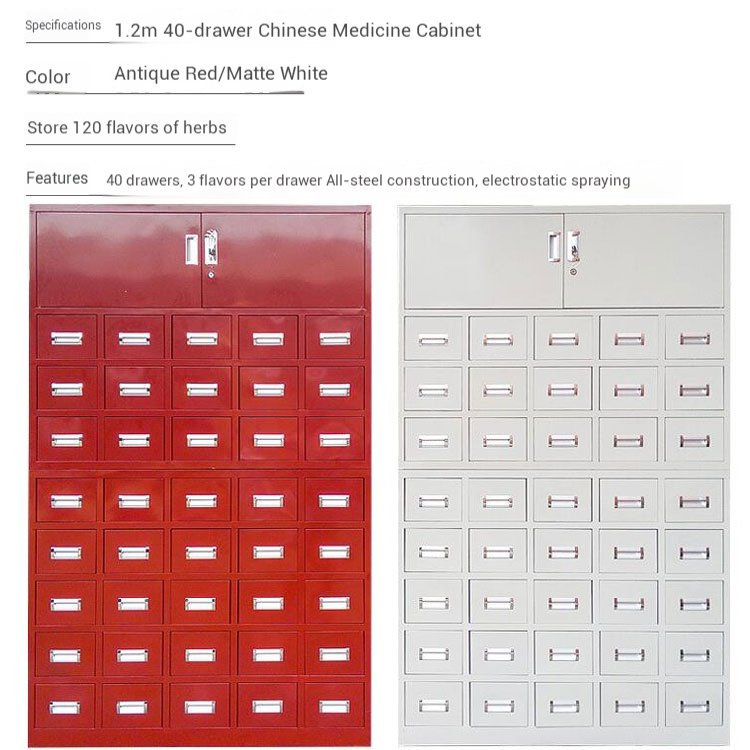
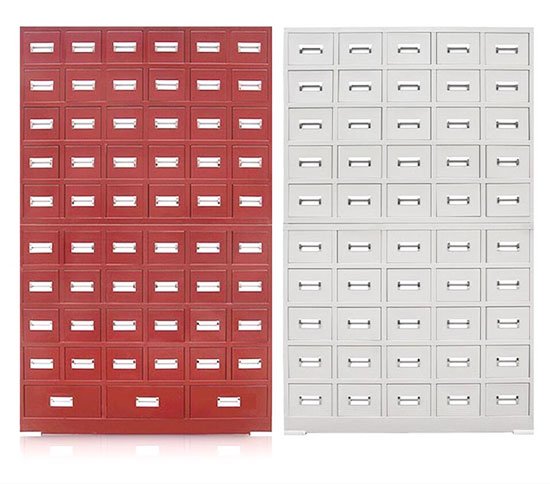
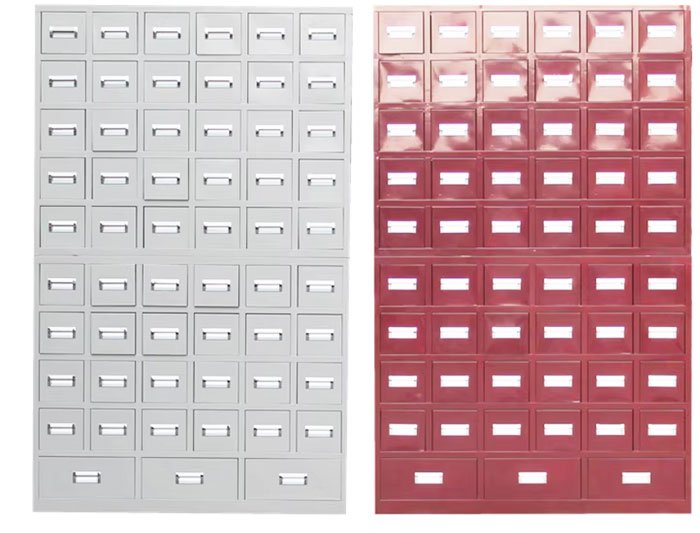
- Wine red — warm and traditional, the finish most patients associate with a classical pharmacy
- Grey white — clean and bright, the choice for modern clinics and wellness centers
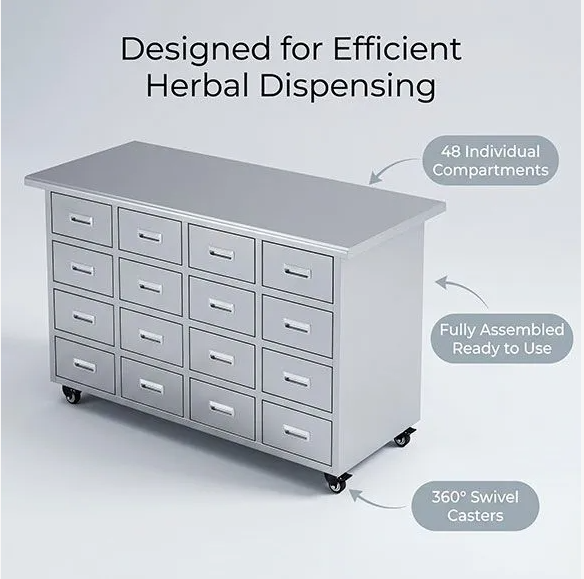
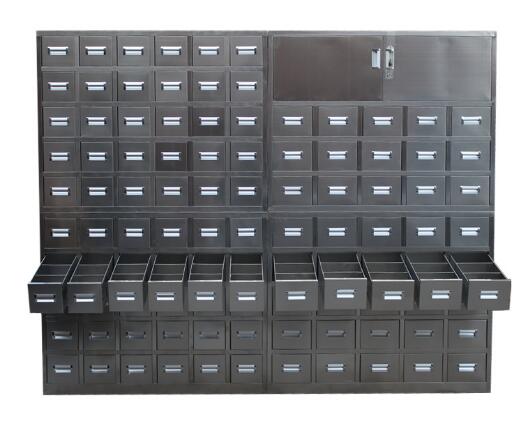
Beyond appearance, the range of sizes and drawer layouts lets practitioners match the cabinet to their herb list instead of the reverse. A solo acupuncturist orders a compact unit; a hospital pharmacy lines a full wall. The drawer grid — from 16-drawer counters to 210-compartment towers — scales to any volume.
Practical Features for Everyday Use
Daily work is where steel cabinets earn their keep:
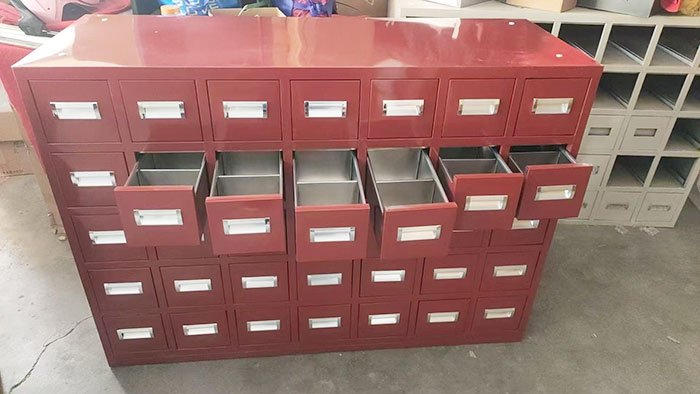
- Ball-bearing drawer slides. A loaded drawer opens smoothly with one hand, 40 to 60 times a day, for years.
- Label slots on every drawer. Card labels stay readable in humid rooms — no curling stickers, no faded handwriting.
- Lockable sections. Controlled and toxic herbs stay separated behind a lock, which audits increasingly expect.
- Surfaces that disinfect well. A weekly wipe-down keeps the cabinet inspection-ready; no refinishing, no special products.
Blending Functionality with Aesthetic Appeal
Storage is part of the patient experience. A well-ordered wall of labeled drawers tells patients the clinic takes its medicine seriously — before a single herb is weighed. The clean lines of a steel cabinet also photograph well, which quietly helps clinics that share their space on social media or booking platforms.
For owners, the calmer environment has a practical payoff: staff move faster in an organized room, and nothing undermines a calm treatment space like the smell of mold or old wood.
Steel vs Wood Over Ten Years
| Factor | Steel Cabinet | Wooden Cabinet |
|---|---|---|
| Humid climate performance | Unaffected by moisture | Swells, molds, joints fail |
| Pest risk | None | Termites and beetles are a constant threat |
| Cleaning | Disinfectant-safe, minutes per week | Absorbs oils; deep cleaning is difficult |
| Odor retention | None — batches stay true | Holds previous batches’ aromas |
| Service life | 15–20+ years | 5–8 years before replacement |
| Locking | Factory-fitted locks | Aftermarket add-ons, often weak |
The 201 vs 304 Question
Professionals choosing stainless options meet the same fork in every quote: 201 or 304. The practical answer depends on where the cabinet lives and how it gets cleaned.
201 stainless steel handles indoor clinic conditions well — normal humidity, daily wiping, standard disinfectants. It is the sensible default for most dispensaries and keeps cost down on multi-unit orders.
304 stainless steel carries more nickel, which is what stands between the surface and salt air. Coastal clinics — anything within reach of sea breeze — and pharmacies that clean with chlorine-based solutions daily should specify 304. The surface resists the pitting corrosion that eventually marks lesser grades in those environments.
Both grades are inert around herbs: no odor transfer, no reaction with dried materials. The choice is about the room, not the medicine.
What Changes in the First Month After Switching
Clinics that replace their wooden storage report a consistent pattern of small changes:
- Week one: staff re-learn drawer positions on the new grid; labels go up clean and stay put.
- Week two: the end-of-day wipe-down shrinks from a chore to a two-minute pass — no more airing out swollen drawers.
- First humid season: no swelling, no mold in corners, no re-sorting stuck drawers — the season that used to damage the old cabinets passes unnoticed.
- First audit: sealed, labeled, lockable storage answers the questions inspectors ask about herb storage.
What Professionals Ask Before Switching
Are acupuncture clinics really moving from wooden to steel herb cabinets?
Yes — the switch is most visible in acupuncture and integrative clinics that prescribe a focused herb list. Compact steel units fit treatment rooms, and the hygiene argument convinces practice partners faster than any durability chart.
Do steel drawers affect delicate herbs?
No. Steel is inert and odor-free. Sealed drawers actually protect volatile herbs better than wood, which breathes and absorbs.
Is powder coating safe around medicine?
Modern epoxy-polyester powder coating is solvent-free, baked hard, and used on medical and food equipment. It does not off-gas into stored herbs.
What happens to the old wooden cabinets?
Most clinics keep one or two as display pieces — the antique look still has value at the front counter — and move all working stock to steel. The wood that fails is the wood doing daily work; wood that only decorates keeps decorating.
Which steel grade should I order?
Powder-coated cold-rolled steel suits dry inland clinics. 201 stainless handles humid interiors; 304 is the coastal and heavy-disinfectant choice.
Can I match an existing wooden cabinet wall?
Wine red steel with traditional drawer proportions sits comfortably beside antique pieces, and many clinics replace wood section by section as the old cabinets fail.
How long does manufacturing and shipping take?
Standard models ship within two weeks; custom colors and sizes run two to four weeks in production. Sea freight adds roughly three to five weeks depending on destination. Plan the switch around a quiet month, not a peak one.
The Direction Is Clear
Herbal professionals are practical people. They switch when the new option removes problems the old one created — and steel removes most of them: moisture, pests, odors, cleaning time, and premature replacement. If your dispensary still runs on wood and any of those problems sound familiar, a steel TCM cabinet is the upgrade your daily workflow will feel from the first week.
Compare models in our steel herbal storage cabinet and stainless steel herbal cabinets ranges, or start with our guide to choosing the right drawer size.