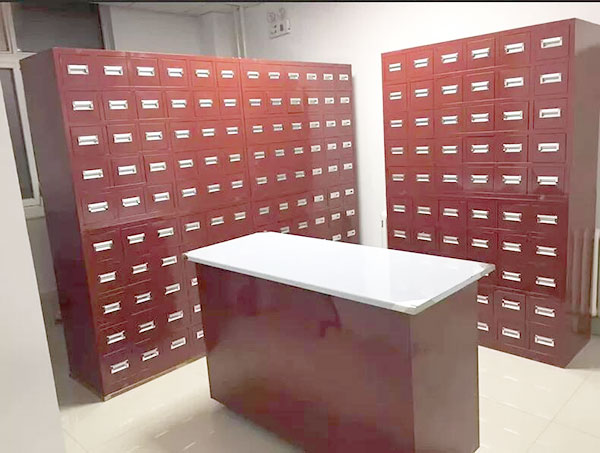
Walk into a busy herbal pharmacy at lunch hour and watch the dispensing counter. One staff member reads the prescription. Another walks the aisles, checking labels, opening boxes, searching for the right batch. A third weighs and packs. When herbs live on mixed shelves or in unlabeled bins, every prescription becomes a scavenger hunt.
A multi-drawer herbal cabinet ends that hunt. One drawer, one herb, one label. The dispenser reaches, pulls, weighs, and moves to the next ingredient — without leaving the counter. This article explains why drawer-based storage has become the standard for herbal pharmacies and wellness centers, and how to pick a configuration that fits your space and your herb list.
The Organization Problem in Herbal Dispensing
Most working pharmacies carry between 150 and 400 herb types. A single prescription typically calls for 10 to 20 of them. That means a dispenser touches 10 to 20 different storage locations for every patient — dozens of times a day.
Poor storage turns each of those touches into lost time. It also raises the stakes on mistakes. Look-alike herbs stored side by side in open bins get swapped. Powders spill into each other. Aromatic ingredients like mint or cinnamon contaminate neighbors. Over a month, small delays and small errors compound into slow service, wasted stock, and patients who quietly stop coming back.
Drawer-based storage attacks the problem at its root: it gives every herb a fixed, labeled, sealed home.
Why One Herb Per Drawer Works
The logic of a herbal pharmacy storage cabinet is simple. Each drawer holds one herb — or one closely related group, separated by internal dividers. A label slot on the drawer face carries the name in pinyin, English, and often its function class. Staff find herbs by position and by label, not by memory.
Three details make this system fast in practice:
- Fixed positions. Once staff learn the layout — often within a week — their hands move to the right drawer without conscious thought.
- Label slots, not stickers. Built-in slots hold card labels that stay legible for years. Adhesive labels peel off in humid spaces and create exactly the confusion the cabinet was meant to solve.
- Adjustable dividers. One drawer can hold three related cuts of the same root, or split into single-herb compartments when the stock list grows.

Multi-Drawer Cabinet vs Open Shelving
Open shelving looks cheaper on day one. Over a year of daily dispensing, the comparison changes:
| Factor | Multi-Drawer Cabinet | Open Shelving |
|---|---|---|
| Light exposure | Herbs sit in the dark — potency lasts longer | Constant light degrades sensitive herbs |
| Dust and pests | Sealed drawers block both | Every surface needs regular wiping and covering |
| Aroma mixing | Strong scents stay contained | Mint, cinnamon, and licorice bleed into neighbors |
| Lookup speed | Fixed positions, labeled faces | Depends on bin discipline and staff memory |
| Stock control | Open one drawer, see exactly what is left | Depth hides stock until it runs out mid-prescription |
| Cleaning | Wipe drawer interiors on rotation | Full-shelf detail cleaning, herbs moved each time |
Wellness centers that switched from open shelves to drawer cabinets commonly report two changes: dispensing gets faster, and end-of-month stock takes count gets shorter, because every drawer is a visible, countable unit.
Built for Daily Professional Use
A working cabinet gets opened and closed 40 to 60 times a day. That is more than 15,000 cycles a year, so construction details matter:
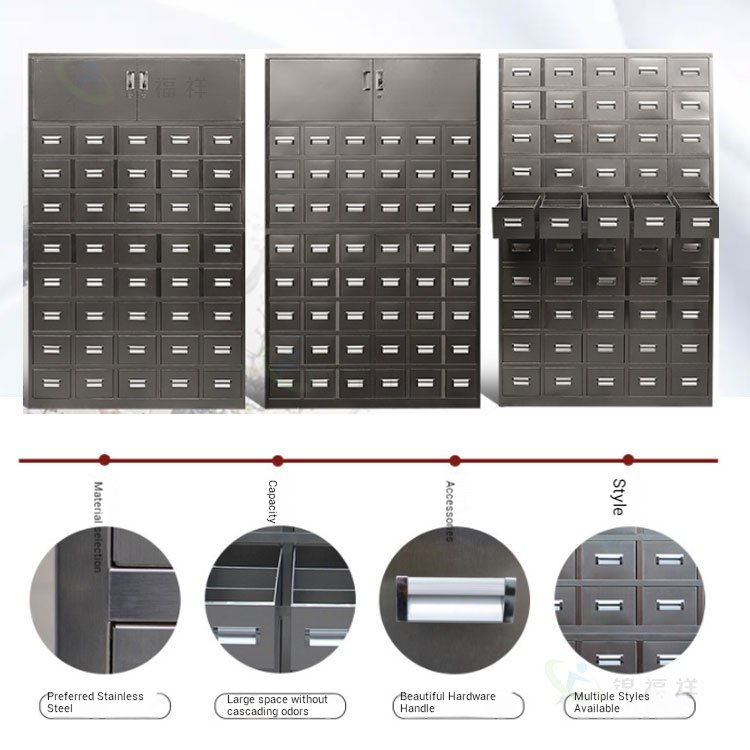
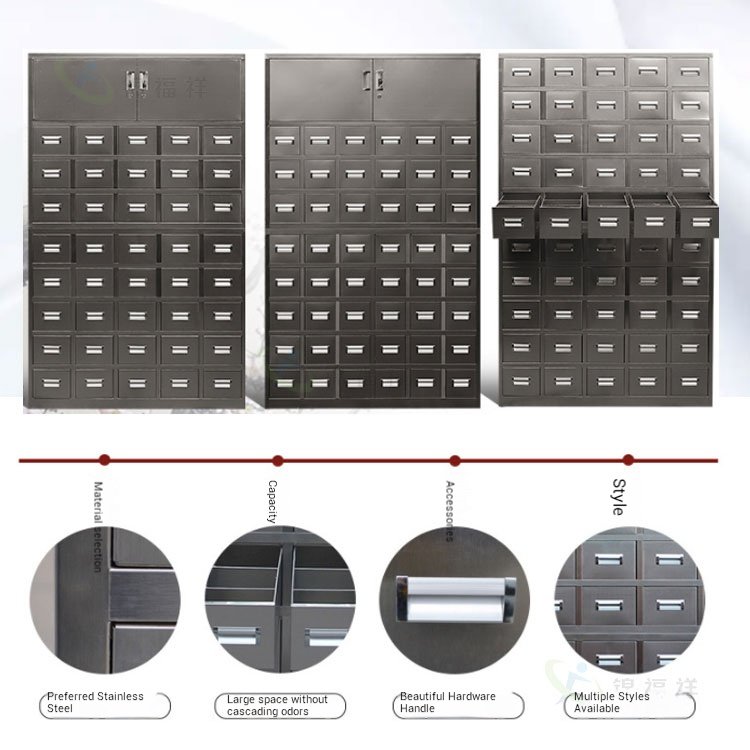
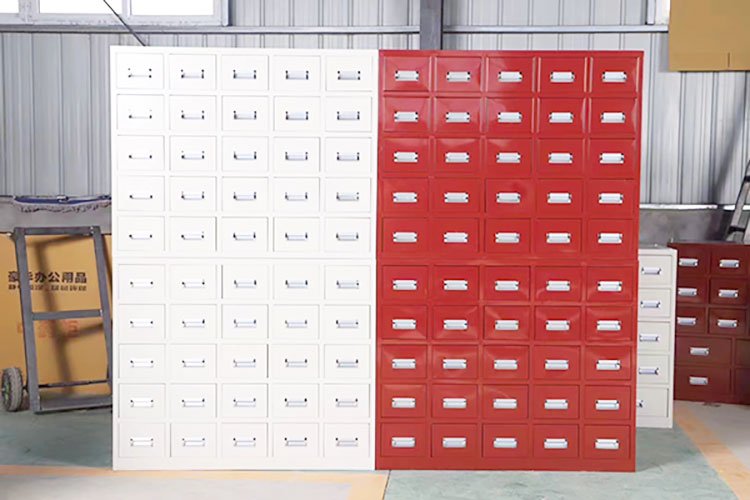
- Steel body. Cold-rolled steel with powder coating, or stainless steel in humid climates, handles daily knocks without cracking the way wood eventually does.
- Ball-bearing slides. Smooth, full-extension slides let a heavy drawer of roots open with one hand — important when the other hand holds a prescription.
- Real load capacity. A deep drawer of dried roots or minerals is heavy. Quality steel drawers carry 8 to 12 kg each without sagging.
Keeping Herbs Fresh and Potent
Herbs have four enemies: moisture, light, dust, and pests. A sealed steel drawer blocks all four at once.
Steel also brings a quiet advantage that wooden cabinets cannot match: it does not absorb herb oils or odors. After a drawer is emptied and refilled, the next batch smells and tastes exactly as it should. In wooden drawers, residues from previous batches linger and slowly change the character of delicate herbs. For a pharmacy selling to repeat patients, that consistency is part of the product.
Stock Rotation Becomes Visible
Drawer storage also fixes a problem most pharmacies do not realize they have: old stock hiding behind new stock. With open bins, refill means pouring new herbs on top and letting the older layer sink out of sight.
In a drawer system, the ritual changes. Open the drawer, check what is left, refill before it runs low, and rotate — older stock to the front, new stock behind it. Because every drawer is a single, countable unit, a monthly stock take becomes a visual pass down the row instead of an afternoon of unstacking boxes. Pharmacies running seasonal herbs find this especially useful: summer formulas get flagged for clearance before autumn stock arrives, not after.
How Many Drawers Does Your Business Need?
Match the cabinet to your herb list — with room to grow. A common regret among new buyers is ordering too small and adding a second, mismatched cabinet a year later.
| Business Type | Typical Herb Range | Recommended Drawers |
|---|---|---|
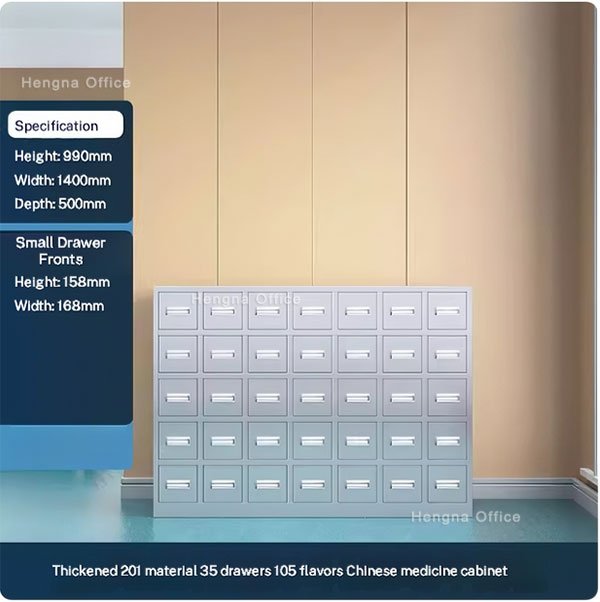
| Solo practitioner or small clinic | 80–120 herbs | 24–36 drawers |
| Retail herbal pharmacy | 150–250 herbs | 36–60 drawers |
| High-volume dispensary | 250–400 herbs | 60–120 drawers, often two units |
| School or teaching dispensary | 300+ herbs | 120+ drawers in modular rows |

Where Multi-Drawer Cabinets Are Used
Herbal pharmacies are the classic buyer, but far from the only one:
- TCM clinics — cabinet beside the consultation room, so prescriptions are filled while the patient waits
- Traditional apothecaries — drawer walls that double as the shop’s visual identity
- Wellness centers and spas — tidy storage that supports herbal teas, packs, and bath blends
- Acupuncture practices — a small cabinet for the 30 to 60 herbs an acupuncturist actually prescribes
- Herbal medicine schools — teaching dispensaries where students learn herb identification by drawer-by-drawer practice
What to Look for Before You Buy
Five checks separate a cabinet that lasts a decade from one that frustrates within a year:
- Steel thickness. Look for 0.6–1.0 mm sheet steel; thinner panels flex when drawers are loaded.
- Drawer depth. At least 120 mm inside height for roots and rolled barks; shallow drawers limit your stock list.
- Slide quality. Ball-bearing slides, tested for tens of thousands of cycles.
- Label system. Built-in slots on every drawer face, not glued holders.
- Lockable section. A lockable top cupboard keeps controlled or toxic herbs separated and secure.
FAQ
Can a multi-drawer cabinet hold powders as well as raw herbs?
Yes. Sealed drawers handle powders, granules, and pills well. Many pharmacies line powder drawers with food-grade paper or use shallow trays to keep refills clean.
How do staff learn the layout quickly?
Label every drawer on day one and group herbs the way prescriptions are written — by function class or by pin-yin alphabet. Most teams stop needing the labels within a few weeks, but the labels remain for new staff and for verification.
Do steel drawers change the smell or quality of herbs?
No. Steel is inert and does not absorb oils or aromas. Herbs keep their own scent, batch after batch.
Are cabinets shipped assembled?
Most steel cabinets ship fully assembled or in large pre-built sections. Confirm with your supplier before ordering, especially for upper-floor deliveries.
Can two different cabinet models sit side by side?
Yes, if the heights match or the difference is planned for. Many dispensaries pair a taller cabinet with a counter-height unit to create a work surface break in the wall. Order both from the same manufacturer so finishes and drawer geometry line up.
Final Thoughts
Organization is not a luxury in herbal dispensing — it is the workflow. A multi-drawer cabinet gives every herb a fixed home, protects it from light, moisture, and mixing, and lets staff fill prescriptions at counter speed. If you are planning a new dispensary or replacing tired shelving, start by counting your herb list, then choose a drawer count one size larger.
Useful next reading: our guide to choosing the right drawer size for herbal medicine cabinets, and the full range of stainless steel herbal cabinets.